How to add local files to Spotify on Mac, Windows, iPhone and Android
To add local files to Spotify on a Mac or Windows PC, open the desktop app, click your profile picture, choose Settings, turn on Show Local Files under Library, then switch on the folders under Show songs from or click Add a source. Your tracks then appear in Your Library under Local Files. On iPhone and Android, turn on Local audio files in Settings and privacy, under Apps and devices.
This guide covers each platform step by step, which file formats Spotify accepts, how to get your own music onto a phone, and what to check when local files do not show up.

How to add local files to Spotify on Mac
Spotify for Mac adds local files through the Library section of its Settings page, and the steps are the same on Windows. The desktop app is where you point Spotify at the folders that hold your music:
- Open the Spotify desktop app on your Mac.
- Click your profile picture at the top and select Settings.
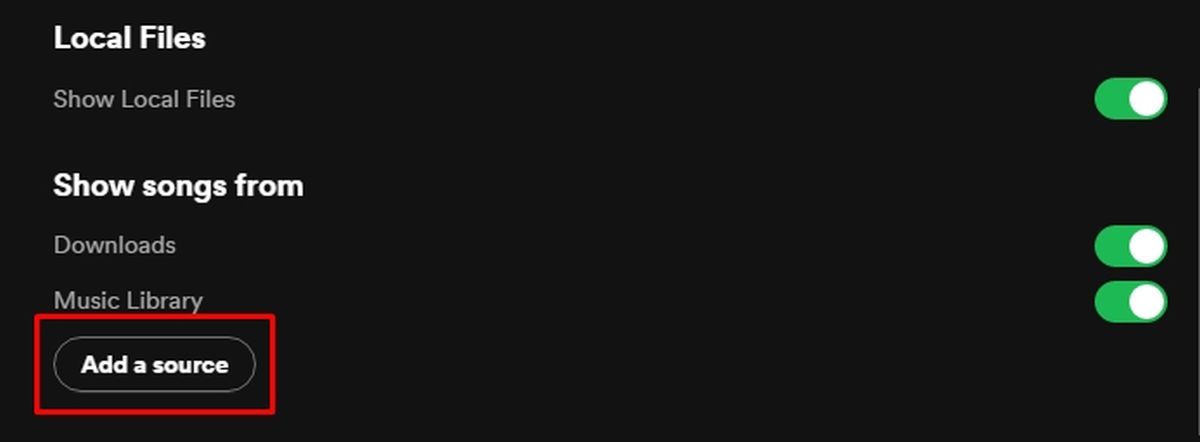
- Scroll to Library and turn on Show Local Files.
- Under Show songs from, switch on the folders you want Spotify to scan.
- To use a different folder, click Add a source and pick it in the Finder dialog.
- Open Your Library. Your music is listed under Local Files.
Mac users who keep music in the Apple Music app should check the file type before adding the folder. Tracks ripped or bought as Apple Lossless (ALAC, saved with the .m4a extension) are not supported by Spotify, and protected purchases will not play either. Convert lossless tracks to MP3 with an audio converter you trust, then add the folder that holds the converted copies.
How to add local files to Spotify on Windows
Spotify for Windows uses the same Settings path as the Mac app, so the folder you choose decides which songs appear. Follow these steps:
- Open the Spotify desktop app.
- Click your profile picture and select Settings.
- Under Library, turn on Show Local Files.
- Switch on the folders listed under Show songs from, or click Add a source to browse to your music folder.
- Go to Your Library and open Local Files.
If some tracks in the folder still do not appear, Spotify's own FAQ suggests updating your codec pack and making sure the files are not DRM-protected.
Local files play on the device that stores them. To listen on your phone as well, copy the same tracks to the phone as described below.
How to add local files to Spotify on iPhone
Spotify for iPhone plays local files that you copy into the Spotify folder on the phone, after you enable the feature in Settings:
- Tap your profile picture in the Spotify app.
- Tap Settings and privacy, then Apps and devices.
- Turn on Local audio files.
- Copy your tracks into the Spotify folder (see the options below).
- Open Your Library and tap Local Files.
Spotify's help page lists these ways to get files into the Spotify folder:
- Files app: select the track, choose Copy or Move, go to Browse, On My iPhone, open the Spotify folder and paste.
- From a Mac by USB: select the iPhone in Finder, click Files and drag the track into the Spotify folder.
- From a Mac by iCloud: use Universal Clipboard with the same Apple Account on both devices, copy on the Mac and paste into the Spotify folder.
- From Windows by USB: select the iPhone in iTunes, click Files and drag the track into the Spotify folder.
If the Spotify folder disappears from On My iPhone, the help file inside it was probably deleted. Restart the app and it comes back.

How to add local files to Spotify on Android
Spotify for Android reads audio files stored on the phone once Local audio files is switched on. The setup takes a minute:
- Tap your profile picture in the Spotify app.
- Tap Settings and privacy, then Apps and devices.
- Turn on Local audio files and allow access to audio when Android asks.
- Open Your Library and tap Local Files.
To get music onto the phone, download it from a storage app such as Google Drive, or connect the phone to a Windows PC by USB, unlock it, tap Allow on the access prompt, choose to open the device to view files and drag the files into the phone's storage. Mac users need an Android file transfer app for the USB route. If tracks are missing, check that Spotify is allowed to access audio files in Android settings. Spotify keeps the current steps for every platform on its local files help page.
Which file formats does Spotify support for local files?
Spotify supports .mp3, .mp4 and .m4p local files, according to its community FAQ on local files. Everything else is either unsupported or only plays in some cases:
| Format | Status | Note |
|---|---|---|
| MP3 | Supported | The safest choice on every platform |
| MP4 (audio only) | Supported | MP4 files that contain video are not supported |
| M4P | Supported if not DRM-protected | Protected purchases will not play |
| M4A (Apple Lossless) | Not supported | Convert to MP3 first |
| FLAC | Not officially listed | May play on desktop after a codec pack update |
Only use files you own or have the right to play. Spotify's FAQ states that files from illegal sources are not permitted.
Why are my local files not showing on Spotify?
Local files usually fail to show on Spotify because of the file format, the folder selection or a permission. Work through this checklist:
- Confirm Show Local Files (desktop) or Local audio files (mobile) is turned on.
- Check that the folder is switched on under Show songs from, or add it again with Add a source.
- Make sure the tracks are MP3, audio-only MP4 or unprotected M4P.
- On mobile, allow Spotify access to files or audio in the device settings.
- Update the Spotify app and your operating system.
- Remove the local tracks from any playlist and repeat the steps.
For other playback errors, see our fix for the Spotify upstream request timeout error.
FAQ
Can I play Spotify local files with Spotify Connect?
No. Spotify says local files cannot currently be played with Connect, so they will not stream to a speaker or TV that you control from the app.
Does crossfade work with local files?
Yes, but only between local tracks that share the same sample rate and the same channel count (mono or stereo).
Do I need to add my local files again after reinstalling Spotify?
Spotify says that after a reinstall you need to download your music and podcasts again. If local tracks are missing afterwards, check the Local Files setting and the folder or file access permission.
Related: Spotify vs. Apple Music compared, how to see your average Spotify listening time, fix Spotify not playing on Alexa

Leave a Reply