Android Home Screen: How to Organize and Customize It
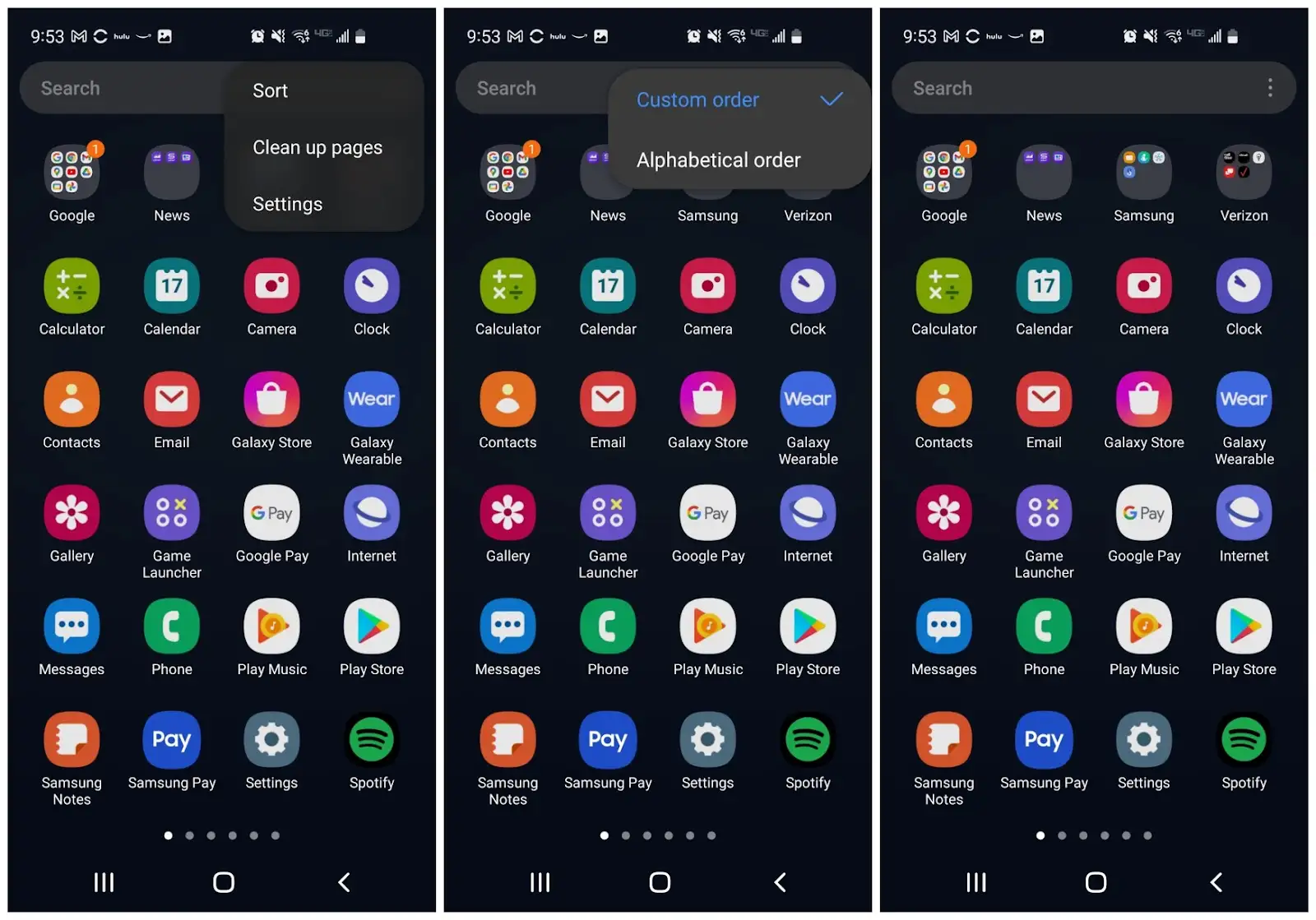
The Android home screen is the page of app icons, folders and widgets you see when you unlock your phone. To organize it, touch and hold an icon to move it, drag one app onto another to create a folder, drag icons to Remove to clear them, and long-press an empty space to add widgets or change the wallpaper and grid. Your apps stay installed in the app drawer the whole time.
This guide covers the steps that work on stock Android and Pixel phones, the matching settings on Samsung Galaxy phones, and a simple layout plan that keeps the screen useful instead of crowded.

What is the Android home screen?
The Android home screen is the launcher's main surface: one or more pages that hold shortcuts to apps, folders (Google calls them groups) and widgets. It is separate from the app drawer, the full alphabetical list of every installed app, which opens when you swipe up from the bottom of the home screen.
That split matters when you clean up. An icon on the home screen is only a shortcut, so removing it changes nothing about the app itself. The app drawer is the complete inventory, and it has a search field at the top, which means you never need every app on a home screen page to reach it quickly.
Most launchers also have a favorites row (the dock) along the bottom that stays the same on every page, and many show a search bar and an information area at the top. Some phones place a Google feed on the leftmost page; if you do not want it, see how to remove the Discover page on Android.
How to add and move apps on the home screen
You add an app to the Android home screen by dragging it out of the app drawer, and you move it by touching and holding it.
To add an app:
- Swipe up from the bottom of the home screen to open the app drawer.
- Touch and hold the app, then drag it to a home screen page.
- Lift your finger to drop it in place.
To move an app, shortcut or widget:
- Touch and hold the item and start dragging. Previews of your home screen pages appear.
- Slide it to the new spot, or to the screen edge to move it to another page.
- Lift your finger.
To add a new page, drag an app, shortcut or group to the right edge until a blank page appears, then lift your finger. To delete a page, move everything off it; Android removes the page once the last item is gone.
Your favorites row works the same way: drag an app you rarely use out of the row to free a slot, then drag the app you use most into it.
How to create folders on an Android home screen
You create a folder on Android by dragging one app icon on top of another. The launcher groups them and suggests a name based on the apps inside.
- Touch and hold an app or shortcut.
- Drag it on top of another app or shortcut, then lift your finger.
- To add more apps, drag each one onto the group.
- To rename it, tap the group, then tap the suggested name. Pick a suggestion above the keyboard or type your own.
To take an app out of a folder, open the folder, touch and hold the app and drag it back onto the home screen. When only one app is left, most launchers dissolve the folder automatically.
Name folders by task rather than by developer. "Travel", "Money" or "Photos" is faster to scan than "Google", because you look for what you want to do, not who made the app.
Remove from home screen vs uninstall
Removing an icon from the Android home screen only hides the shortcut, while uninstalling deletes the app from the phone. When you touch and hold an app, you may see Remove, Uninstall or both, so read the label before you drop the icon.
| Action | What happens | How |
|---|---|---|
| Remove | The icon leaves the home screen; the app stays installed in the app drawer | Touch and hold the icon, drag it to Remove |
| Uninstall | The app is deleted from the device | Touch and hold the icon, drag it to Uninstall, or use Google Play |
| Archive | Frees space but keeps the app icon and your personal data on the device | Offered by Google Play for apps you have not used for a while |
To clear out several apps at once, use Google Play: open the Play Store, tap your profile icon at the top right, tap Manage apps & devices, then Manage, select the app and tap Uninstall. If you later reinstall an app from outside the Play Store and hit an error, see how to fix the "App not installed" error.
How to add widgets to the home screen
You add a widget to the Android home screen by touching and holding an empty space and choosing Widgets. Widgets show live information, such as the weather, your calendar or a music player, without opening the app.
- Touch and hold an empty space on a home screen page.
- Tap Widgets.
- Find the app whose widget you want and tap it to see the available sizes.
- Touch and hold a widget, slide it into position, then lift your finger.
Most widgets can be resized after placement: touch and hold the widget, then drag the handles at its edges. Use widgets sparingly. One calendar or to-do widget on the main page often replaces three or four icons, but a page full of widgets is as cluttered as a page full of apps. For ideas on fitting more into less space, see this older guide to stacking several widgets in the place of one.
How to change the wallpaper, grid and icons on a Pixel
On a Google Pixel, wallpaper, colors, grid size and icon style all live in one menu: touch and hold an empty space on the home screen and tap Wallpaper & style. According to Google's Pixel help, the menu contains these options:
- Change wallpaper: choose Home screen or Lock screen to set them separately, pick a preset or Choose a photo, then Preview and Apply.
- Colors: pick a palette that matches your wallpaper, or Other colors for a custom one.
- Layout: choose a grid size. A denser grid fits more icons per page; a looser grid gives bigger, easier targets.
- Icons: choose a Style (Default, Minimal or Create your own) and a Shape. The page notes that icons in the all apps list are not stylized.
- Theme pack: download and apply a theme that changes several of these at once.
Samsung Galaxy home screen settings
On Samsung Galaxy phones, the home screen options are in Settings > Home screen, or you can open them by pinching the home screen and tapping the settings (cog) icon.
Two Samsung settings are especially useful for keeping a layout tidy:
- Lock Home screen layout: turn this on and icons and widgets stay where you put them until you unlock it. If a page has no free space, a newly installed app can still add a shortcut on a new page.
- App and widget style: on recent One UI versions, this section lets you show or hide App labels and Widget labels and change icon size with a slider.
Samsung also offers its own grid options for the home screen. Exact names and positions change between One UI versions, so if you cannot find an option, use the search field at the top of the Settings app and type "home screen".
A simple layout plan for an Android home screen
The most usable Android home screens follow a reach-and-frequency rule: the apps you open most go where your thumb already rests, and everything else goes one level deeper. A practical version:
- Favorites row: the four or five apps you open many times a day (phone, messages, browser, camera).
- Bottom half of page one: daily apps you open at least once a day, within easy thumb reach.
- Top of page one: one widget that answers a question at a glance, such as calendar or weather.
- Page two: task folders for weekly apps (Travel, Money, Shopping).
- App drawer only: everything else. Search finds it in a second.
Review the layout when your habits change. If you have not opened an icon in a month, remove it from the home screen; if you have not opened the app at all, uninstall or archive it.
FAQ
How do I turn off app suggestions on a Pixel home screen?
Touch and hold a blank area, tap Home settings, then Suggestions. Turn off Suggestions on Home screen, Suggestions in all apps list, or both.
How do I change what the At a Glance area shows on a Pixel?
Touch and hold the information area at the top of the main home screen, tap Customize, then the settings icon to choose what appears there.
Can I change the look of the Google search bar on the home screen?
Yes. On a Pixel, touch and hold the search bar, tap Widget settings, and choose a theme and the shortcuts it shows.
Will removing an icon from the home screen delete my data?
No. Remove only deletes the shortcut; the app and its data stay on the phone and the app remains in the app drawer. Only Uninstall deletes the app.
Related: Remove the Discover feed on Android, Android System SafetyCore explained, Fix "App not installed" on Android

This actually merits an article? And then goes on to completely ignore widgets? Then again the cretin target audience for this pap wouldn’t recognize a widget if it danced naked in front of them.
holy crap this site has lost its focus.
Or if you’re lazy like me; install KISS launcher and never think about your homescreen ever again. KISS is peak Android.
Lawnchair launcher is peak and what I use now. The default Android 12 launcher is complete garbage and forces you to use the Google search widget.
Can we also have an article on how to watch paint dry, please? .
Older android phones (before android8) had more comfortable UI .
This article is a summary from an article from the New York Times from 2021.