How to change the lock screen wallpaper on a Mac (macOS Sonoma and later)
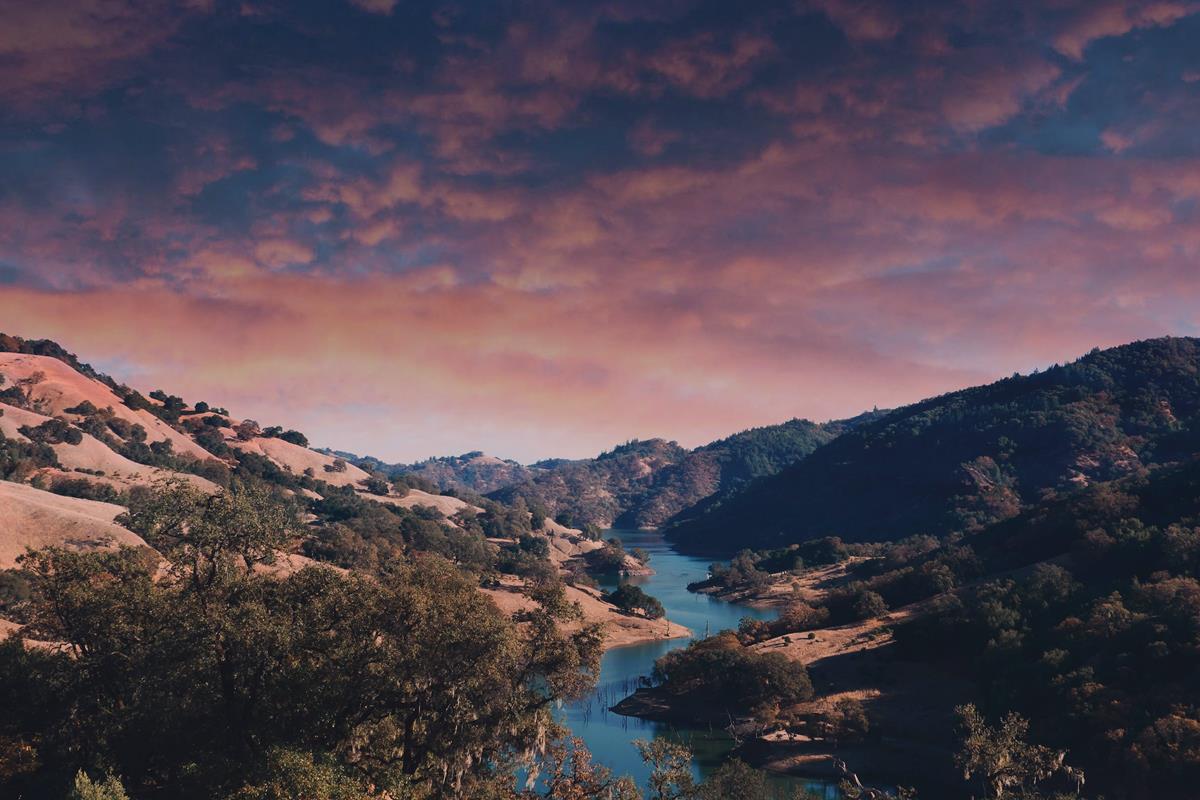
The Mac lock screen wallpaper, on a MacBook or a desktop Mac, is your desktop wallpaper. Current macOS has no separate lock screen picture: open System Settings, click Wallpaper, and pick an aerial, a dynamic wallpaper, a picture, a color or one of your own photos. The same image then appears behind the clock and login field when you lock the Mac. Aerials add a twist: they play as slow-motion video on the lock screen and freeze into the desktop wallpaper when you unlock.
This guide covers the steps, what each lock screen element is controlled by, the Sonoma wallpapers that introduced the animated look, and why a different picture can appear after a restart.
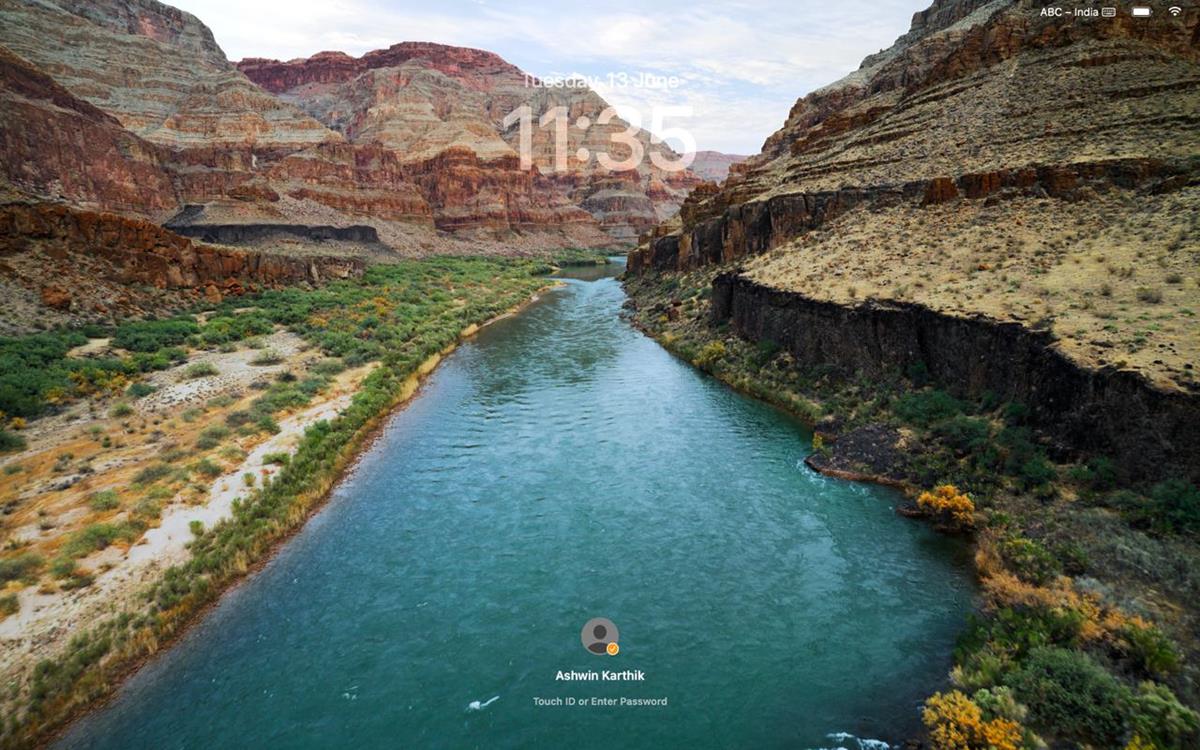
How to change the lock screen wallpaper on a Mac
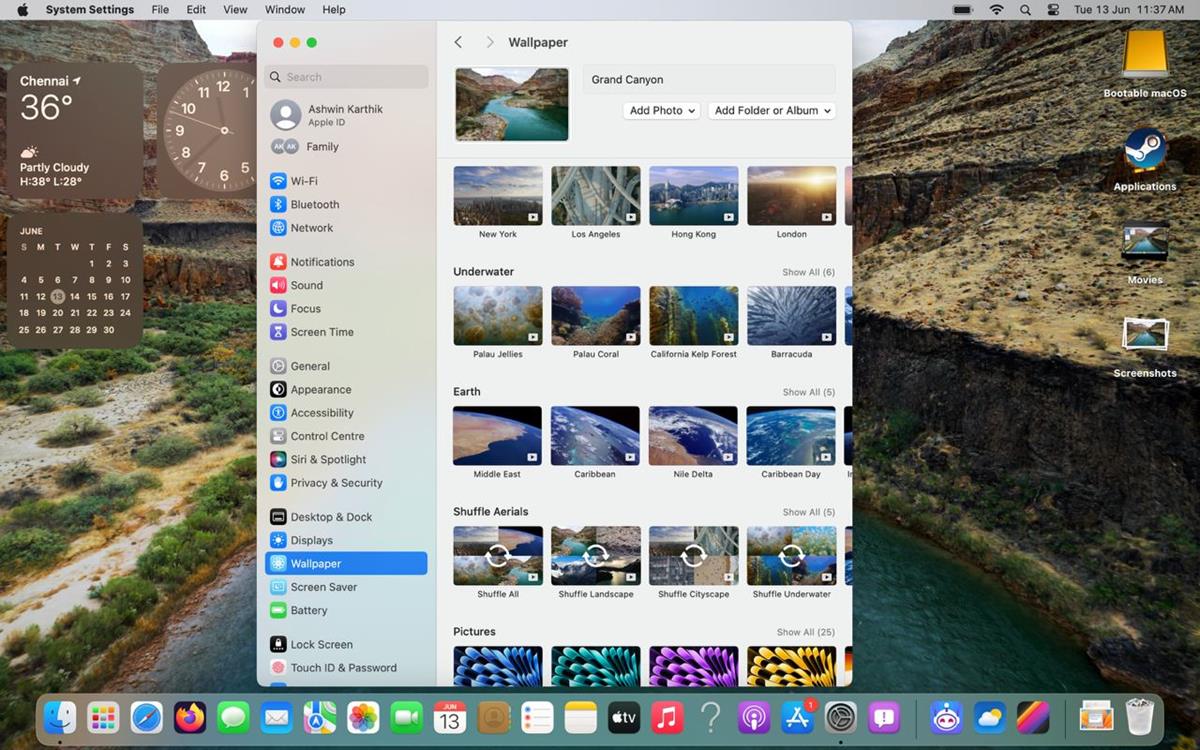
You change the Mac lock screen wallpaper in System Settings > Wallpaper, because the lock screen always shows the wallpaper of the signed-in user. Apple's wallpaper guide lists the steps:
- Open the Apple menu and choose System Settings.
- Click Wallpaper in the sidebar (you may need to scroll down).
- Pick a category: Dynamic Wallpapers, Your Photos, the Landscape, Cityscape, Underwater or Earth aerials, Shuffle Aerials, Pictures or Colors.
- Click a wallpaper. If it shows a download arrow, the Mac downloads it first.
- Set the options shown at the top of the window, such as the light or dark appearance of a dynamic wallpaper or how often aerials shuffle.
- Lock the Mac with Apple menu > Lock Screen (or Control-Command-Q) to check the result.
To use your own image, scroll to Your Photos, click Add Photo and choose from Photos, a file or a folder. You can also drag an image onto the preview at the top of Wallpaper settings, Control-click an image file in Finder and choose Set Desktop Picture, or Control-click an image in Safari and choose Use Image as Desktop Wallpaper. A folder or album rotates through its pictures, so the lock screen changes with it.
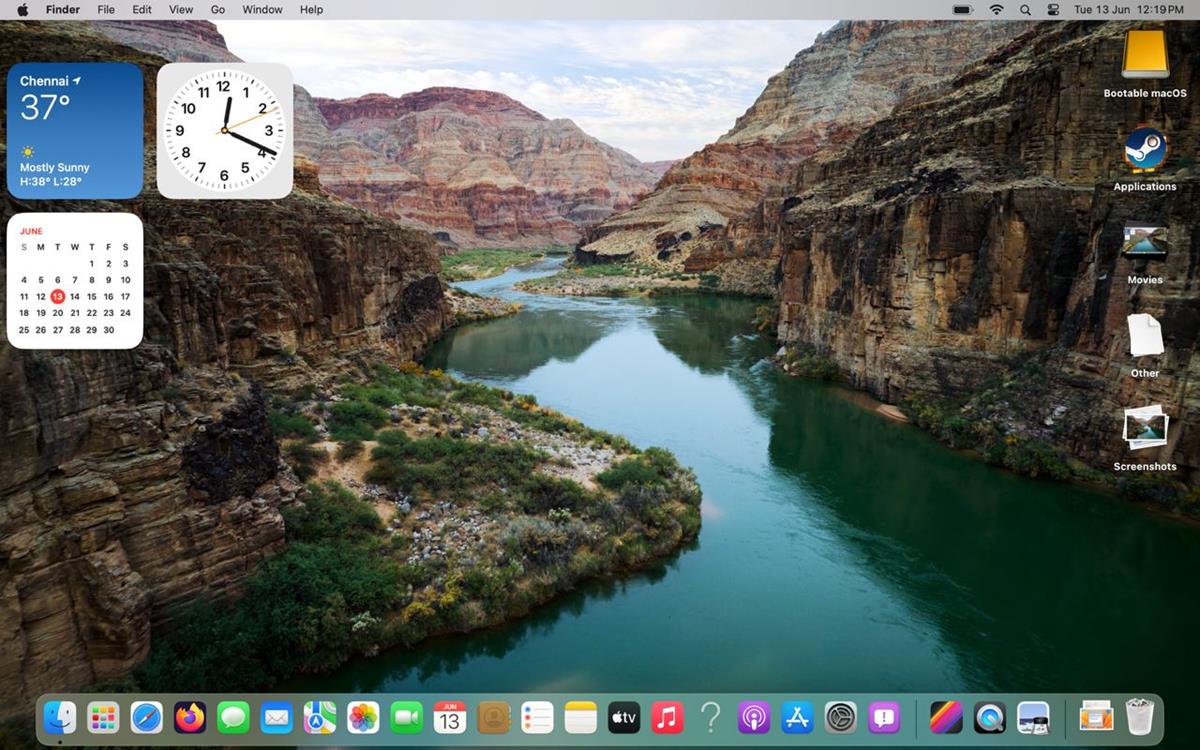
What controls each part of the Mac lock screen
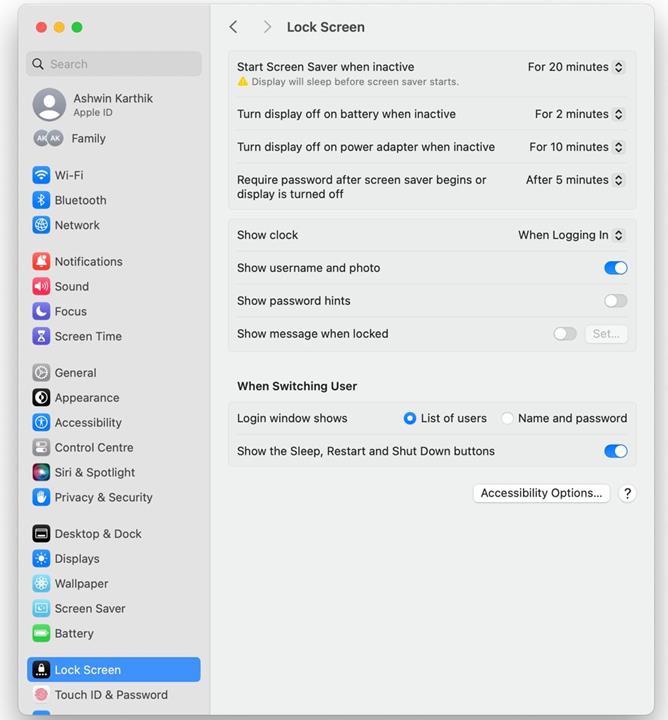
The Mac lock screen is built from three settings areas, and knowing which one owns an element saves a lot of clicking. The wallpaper comes from Wallpaper settings, the moving video from the screen saver, and the login behavior from Lock Screen settings.
| Lock screen element | Where to change it | Notes |
|---|---|---|
| Background picture | System Settings > Wallpaper | Same image as the desktop, no separate picker |
| Moving aerial video | Wallpaper > Screen Saver | Plays when idle or locked, then becomes the wallpaper |
| Large clock | Wallpaper > Clock Appearance | Show on the lock screen, on both, or hide it; font and weight |
| Password timing | System Settings > Lock Screen | Require password after screen saver or display off |
| Message and login window | System Settings > Lock Screen | Show message when locked, user list or name and password |
| User picture | Your account's login picture | The round photo above the password field |
The Lock Screen settings page also holds the idle times for turning the display off on battery and on the power adapter, password hints, and whether the login window shows the Sleep, Restart and Shut Down buttons. In macOS Sonoma itself the large clock toggle sat in Lock Screen settings; newer releases moved it to Clock Appearance in Wallpaper settings.
macOS Sonoma wallpapers and the animated lock screen
macOS Sonoma introduced the aerial wallpapers that move on the lock screen: slow-motion videos of landscapes, cities, underwater scenes and Earth from orbit, similar to the Apple TV aerials. When you unlock the Mac, the motion stops and the last frame stays on the desktop as a still wallpaper, which 9to5Mac described at Sonoma's announcement in June 2023. The same update moved the date and time to the top center of the lock screen, as on iPhone and iPad, and shrank the login area at the bottom.
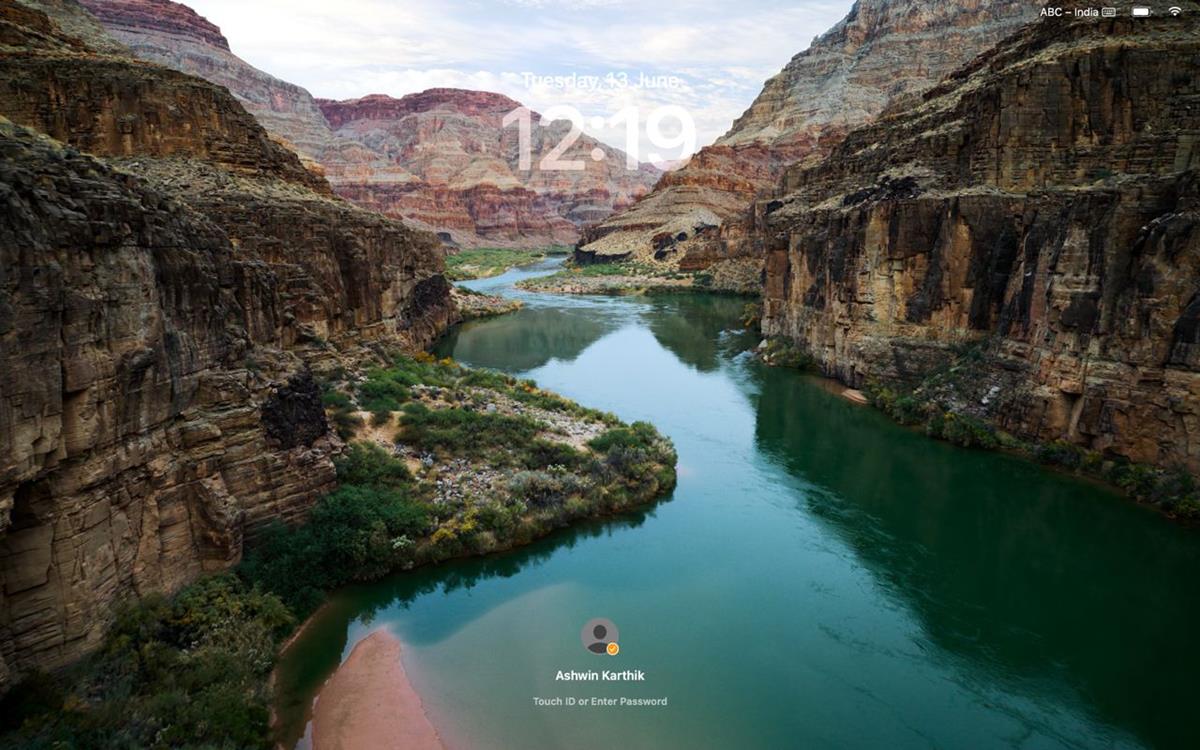
The aerial categories are still part of Wallpaper settings in current macOS releases. To get the Sonoma look:
- Pick an aerial from Landscape, Cityscape, Underwater or Earth in Wallpaper settings.
- Choose Shuffle Aerials to rotate through all aerials or a single category, and set how often they change.
- Pick a dynamic wallpaper instead if you want a still image that shifts between light and dark appearances.
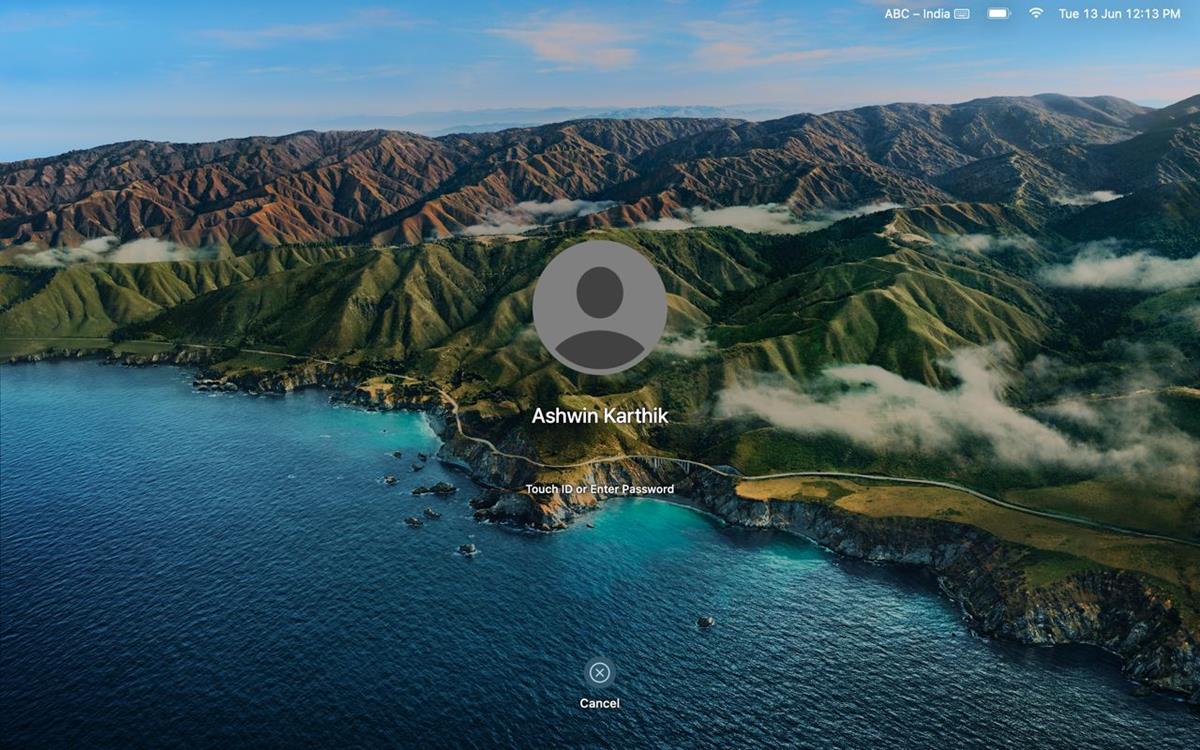
Aerials are large video files, so each one downloads when you first select it. For comparison, the macOS 13 Ventura lock screen below still showed the clock in the menu bar and a static wallpaper. Everything else that changed in macOS 14 Sonoma is in our overview.
How to use an aerial screen saver on the lock screen
An aerial screen saver is turned on from the Screen Saver option in Wallpaper settings, and by default the aerial you pick as wallpaper also plays as the screen saver. Apple's screen saver guide gives these steps:
- Open System Settings and click Wallpaper.
- Click Screen Saver.
- Choose Custom, then pick a category: macOS, the aerials, Shuffle Aerials or Other (your photos, a message, Word of the Day).
- Set when the screen saver starts after the Mac goes idle.
The screen saver starts by itself after the idle time unless the display is already off. To start it at once, lock the Mac from the Apple menu or use a hot corner. Press a key, move the mouse or touch the trackpad to stop it. If you would rather not see video at all, choose a still picture or color as wallpaper and a non-aerial screen saver, and the lock screen stays static.
Why the Mac shows a different wallpaper after a restart
A different picture after a restart is normal on a Mac with FileVault turned on. The first screen after startup belongs to a preboot environment that runs before your user account and its wallpaper preferences load, so it can show a default picture, and your own wallpaper only appears once you have signed in. Reports in Cindori's lock screen guide match this behavior on recent releases.
Use this checklist if the lock screen picture looks wrong:
- Test with a normal lock (Control-Command-Q) rather than a restart.
- Reselect the wallpaper in Wallpaper settings.
- Check whether you are looking at the screen saver instead of the wallpaper.
- Try a local JPEG or PNG file instead of a cloud folder.
- Do not turn off FileVault or change system file permissions to fix a cosmetic issue.
On a Mac with several accounts, each user has their own wallpaper, and the lock screen shows the one of the account that is locked.
FAQ
Can a Mac have a different lock screen and desktop wallpaper?
Not with built-in settings: macOS uses the desktop wallpaper on the lock screen. Some third-party wallpaper apps add a separate lock screen image; check that the app supports your macOS version before installing it.
How do I lock my Mac instantly?
Press Control-Command-Q or choose Apple menu > Lock Screen. A hot corner that starts the screen saver also works if a password is required after the screen saver begins.
How do I hide the large clock on the Mac lock screen?
Open System Settings > Wallpaper and change Clock Appearance so the large clock is hidden. On macOS Sonoma the same switch is in Lock Screen settings as Show large clock.
Do aerial wallpapers take up storage?
Yes, each aerial is a video that downloads when you first pick it, which is why some thumbnails show a download arrow. Still pictures and colors need no download.
Related: desktop widgets in macOS 14 Sonoma, Stage Manager on the Mac, undo and redo shortcuts on Mac and Windows

Odd choice of pics from Apple–Sonoma, CA and a realtor?
https://www.noelflores.com/lifestyle/sonoma/
The others look like Colorado River photos from Grand Canyon views.
The Birthplace of California Winemaking.
Population: 11,025 • Sq. Miles: 2.74
Just 45 miles north of San Francisco is the quaint town of Sonoma. Its colonial-era plaza –– the largest in the Golden State, –– encompasses a variety of shops, more than 25 bars and restaurants, as well as an historic California Mission.
The first image is from Unsplash, which probably the realtor that you linked to is also using. The other images are from macOS 14 Sonoma’s screen savers.
https://unsplash.com/photos/E4VtWWra_cI
All California history is surrounded by Spanish heritage and Spaniard names. Anyway it’s quite amazing that Mexico lost the incredible number of the 55% of its whole territory, including now present states of California, Nevada, Utah, New Mexico, near the half of Arizona and Colorado, and several important parts of Oklahoma, Kansas, and Wyoming, all of them lost after 1821, the year of independence from Spain. Mexico is considered the first country of the former Spanish Empire in percentage number of lost territories after gained independence. An unexpected end by the way. Some Mexican teacher explained so time ago in one symposium in Madrid that if those territories weren’t lost, now Mexico would be among the G7 group with the USA and Canada. So intense bad luck, imho. :[
If Mexico had remained same, US would’ve been directly affected by World Wars and maybe even Civil war.
This is a perfect example on how all articles should be, with high quality photos and also with some detailed explanations, a delightful experience for the reader’s eyes. Thanks @Ashwin for all these good articles about the MacOS Sonoma and the Apple world, of the most appreciated sections here, at least by me! :]
* The Firefox section is also gratefully appreciated, of course.
:)
I wish I could’ve embedded the GIF in the article, but it’s way too big even after I compressed it.