Steam Error Code E20: What It Means and How to Fix It
Steam error code E20 is a sign-in failure: the Steam client shows "Something went wrong while attempting to sign you in. Please try again later" and refuses the login. Valve has not published an official definition, but user reports point to the connection between your PC and Steam's login servers. Check Steam's status first, then restart Steam and your router, clear the client's web cache, and allow Steam through your firewall.
This guide orders the fixes from fastest to most involved, explains which cause each one addresses, and tells you when to stop troubleshooting and contact Steam Support.

What does Steam error code E20 mean?
Steam error code E20 means the Steam client could not finish signing you in to your account. The message most users report is "Something went wrong while attempting to sign you in. Please try again later", followed by "Error code: E20" (some users see it written as "Error Code: 20"). It can appear in the desktop client, while browsing the store inside the client, and occasionally in a browser login.
Valve does not document what E20 stands for. What the reports in the Steam Community have in common is that the account itself is fine: the login request fails on the way. The causes that come up again and again are:
- A Steam-side problem: login servers under load or in maintenance, which resolves itself.
- A network problem: an unstable connection, packet loss, or a router or ISP route that blocks Steam.
- A blocked client: a firewall or security suite that stops Steam from reaching the internet.
- Corrupted local data: a damaged web cache in the Steam client, which renders the login window.
Work through the fixes below in order. The first three take under five minutes and solve most cases.
Check whether Steam is down
The first check for Steam error code E20 is whether the problem is on Valve's side, because no local fix helps during an outage. Open the unofficial status page Steam Status on your phone or another device and look at the entries for the Steam Community and the Steam connection managers.
If those show as slow or offline, wait and retry the sign-in later. Scheduled Steam maintenance and large sales or game launches are typical moments for login errors. Users in the Steam Community who saw E20 often report that simply retrying after some time worked without any other change.
If everything shows normal, the cause is most likely on your side, and the next steps apply.
One caution while you retry: do not hammer the login button. Steam limits repeated sign-in attempts, and too many failures in a short period can trigger a separate message saying there have been too many sign-in failures from your location. If you see that message, stop and wait before trying again.
Restart Steam and your network
Restarting Steam and your router fixes Steam error code E20 when a stale connection or a router glitch is the cause. Do it in this order:
- Close Steam completely: right-click the Steam icon in the system tray and choose Exit, so it does not keep running in the background.
- Unplug your router (and modem, if separate), wait about 30 seconds, then plug it back in and wait until the connection is fully up.
- Restart your PC.
- Start Steam and sign in again.
If you are on Wi-Fi, try a wired Ethernet connection or a phone hotspot for one sign-in attempt. If the login works on a different network, the problem is your home network or your ISP's route to Steam, and you can focus on the router and packet loss checks below.
Some users also report success by starting Steam in offline mode, restarting it, and switching back to online mode. That only works if Steam has already remembered your login on this PC.

Clear the Steam client's web cache
Clearing the Steam client's web cache fixes Steam error code E20 when damaged local files break the sign-in window. The Steam login screen and store are rendered by a built-in browser that keeps its own cache, and a corrupted cache is a frequently reported cause.
- Exit Steam completely from the system tray.
- Press Windows key + R, type %localappdata%\Steam and press Enter.
- Open the htmlcache folder and delete its contents.
- Start Steam and sign in again.
This removes only cached web data: your games, saves and settings are not touched, and Steam rebuilds the cache on the next start. If the folder does not exist, close Steam and delete the whole Steam folder inside %localappdata% instead; it holds client cache data, not your game library, which sits in the Steam installation folder.
Allow Steam through your firewall
A firewall or security suite causes Steam error code E20 when it blocks the client from reaching Valve's servers. Rather than switching the firewall off, which leaves your PC exposed, allow Steam explicitly:
- Open Windows Security from the Start menu.
- Select Firewall & network protection, then Allow an app through firewall.
- Click Change settings, find Steam in the list and tick it for Private and Public networks.
- If Steam is missing, use Allow another app and select steam.exe from the Steam installation folder.
If you use a third-party antivirus or firewall, add an exception for steam.exe there as well. To test whether the security software is the cause, you can pause it briefly for one sign-in attempt, then turn it back on immediately. Valve's support article on troubleshooting network connectivity covers further router and connection checks, which helps if your network filters traffic.
Check for packet loss
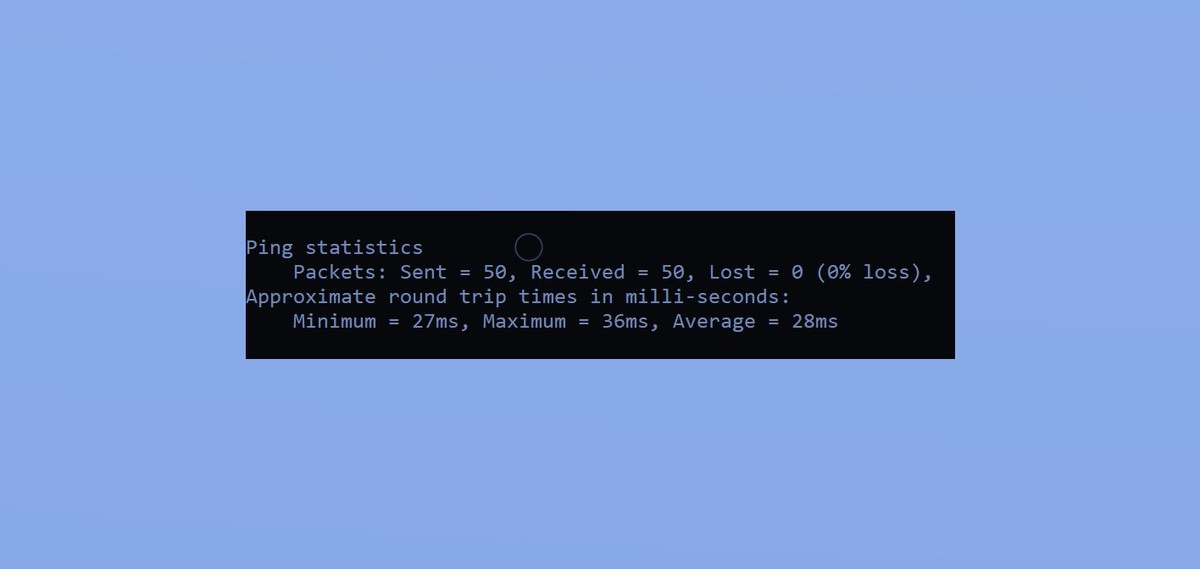
Packet loss causes Steam error code E20 when data between your PC and Steam goes missing, so the sign-in times out. A quick test from the Windows command prompt shows whether your connection drops packets:
- Press Windows key + R, type cmd and press Enter.
- Type ping google.com -n 50 and press Enter. This sends 50 test packets.
- Read the summary at the end: "Lost = 0 (0% loss)" is a healthy result. Any loss, or lines saying "Request timed out", points to an unstable connection.
If you see loss, switch from Wi-Fi to a cable, move closer to the router, or restart it again. Persistent loss on a wired connection is a matter for your ISP. A stale DNS cache can also send Steam to the wrong servers; our guide on how to view and manage cached DNS entries on Windows explains how to inspect and clear it.
Use a VPN only as a network test
A VPN can confirm whether your ISP's route to Steam causes error code E20, because it sends your traffic along a different path. If sign-in works over a VPN but not without it, the problem sits between your ISP and Valve, and you can report it to your provider. How VPNs work explains what changes when you connect.
Treat it as a diagnostic step, not a permanent workaround. The Steam Subscriber Agreement prohibits using IP proxying or other methods to disguise where you live, for example to reach region-locked content or regional prices. Connect to a server in your own country, test the sign-in, and do not buy anything while the VPN is active.
Contact Steam Support
If Steam error code E20 persists after all of the above, contact Steam Support, because a problem with the account or with Valve's systems can only be fixed on their side. Go to Steam Support and choose Help, I can't sign in, which works without being logged in to the client.
Include the exact error text, the code E20, when it started, and what you already tried (network change, cache cleared, firewall exception). That saves a round of back-and-forth. Use only the official help site: never share your password or Steam Guard codes with anyone who claims to offer support elsewhere.
FAQ
Is Steam error code E20 a ban or a problem with my account?
Reports of E20 describe a failed sign-in, not an account restriction, and most users get back in once the connection or cache issue is fixed. If you suspect an account problem, use the official sign-in help to check.
Will clearing the Steam cache delete my games?
No. The htmlcache folder only holds web data for the client's built-in browser. Installed games and saves live in the Steam library folders and are not affected.
Why does Steam E20 appear on one network but not another?
That pattern points to the network: router settings, a firewall on the network, or your ISP's route to Steam. Restart the router and run the packet loss test, then contact your ISP if the problem stays.
Related: fix the "could not connect to Steam network" error, Steam auth timeout in Rust, change your Steam privacy settings

Leave a Reply