How to change app icons on iPhone with your own pictures

Yes, you can change app icons on an iPhone with iOS 16 and later, but not by replacing the original icon. You use the Shortcuts app to create a shortcut that opens the app, give that shortcut any picture from your Photos or Files as its icon, and add it to the Home Screen. Since iOS 18 you can also restyle all icons at once as Dark or Tinted, and iOS 26 adds Clear.
This guide covers both routes: the per-app custom picture method, which works on iOS 16, iOS 17 and every newer release, and the built-in Home Screen styles that recolor every icon in one step. It also explains the trade-offs of custom icons, such as missing notification badges, so you can decide which apps are worth changing.
Can you customize app icons on iPhone with iOS 16?
iOS 16 does not let you swap an app's own icon or install icon packs the way Android launchers do. The supported workaround is a Home Screen shortcut: the Shortcuts app, made by Apple and preinstalled on current iPhones, can launch any installed app, and Apple's own Shortcuts User Guide documents adding a shortcut to the Home Screen with a photo of your choice as the icon.
The result looks like a normal app icon. Tapping it runs the shortcut, which opens the real app. The original app stays installed and untouched, so updates, data and settings are not affected, and you can undo the change at any time by deleting the shortcut.
There is a second, narrower option inside some apps: a few developers offer alternate icons in the app's own settings (often under Appearance or App Icon). When an app offers this, it is the cleanest choice, because the real icon changes and badges keep working. Most apps do not, which is why the Shortcuts method is the one most people use.
How to add a picture to an app icon on iPhone
To add a picture to an app icon, create a Shortcuts shortcut that opens the app, then set your picture as the shortcut's Home Screen icon. Save the image you want to use to Photos or Files first; a square image gives the cleanest result. The photo picker is the same one you use to change a contact photo on iPhone.
- Open the Shortcuts app and tap the + button to create a new shortcut.
- Tap Add Action, search for "Open App" and select it.
- Tap the word "App" in the action and choose the app you want a custom icon for.
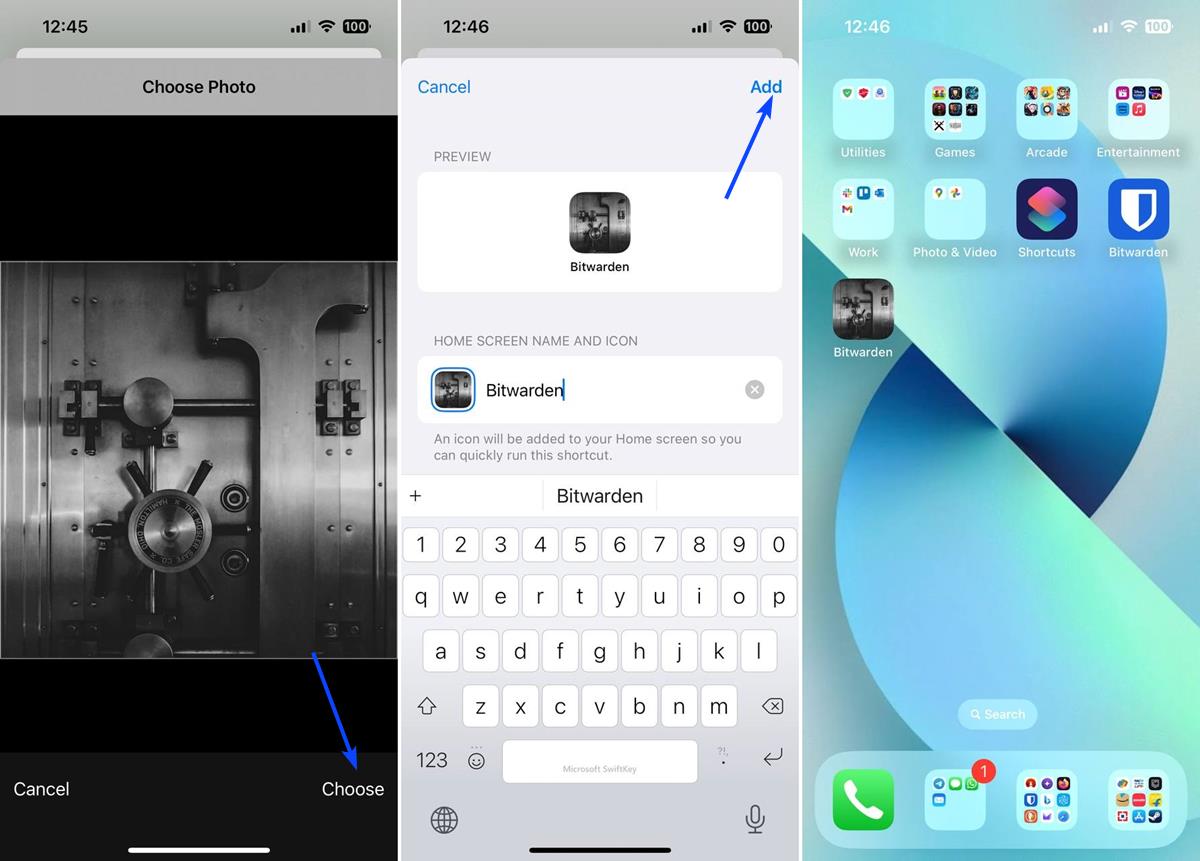
- Open the shortcut's options (the info button on iOS 16, or the shortcut name or Share button at the top of the editor on newer versions) and tap Add to Home Screen.
- Tap the name under Home Screen Name and Icon and type the name you want to see under the icon, for example the app's name.
- Tap the small icon next to the name and pick Take Photo, Choose Photo or Choose File.
- Select your picture, adjust the crop if asked, and confirm it.
- Tap Add. The new icon appears on your Home Screen.
If you closed the editor before step 4, you do not need to start over. Find the shortcut in the Shortcuts app, open it again (long press and choose Edit on older versions) and continue from the details screen.


How to change the icon picture of an existing shortcut
To change the icon picture again, add the shortcut to the Home Screen a second time with the new image, then remove the old copy. The Home Screen icon is set at the moment you tap Add, so editing the shortcut later does not swap the picture that is already on the Home Screen.
Inside the Shortcuts app itself, Apple lets you modify shortcut colors and icons: open the shortcut, tap the icon next to its name, and choose a color and a glyph. Those glyphs show in the Shortcuts library and widgets. A photo icon is only available through Add to Home Screen.

How to hide the original app icon
Once the custom icon works, remove the original icon from the Home Screen so you do not see the app twice. Touch and hold the original app icon, choose Remove App, then pick Remove from Home Screen. Do not choose Delete App, which uninstalls the app and breaks the shortcut.
The app remains in the App Library, the last page to the right of your Home Screen pages, so you can still find it with search or drag it back later. The shortcut keeps working because it opens the installed app, not a copy of it.
Built-in icon styles: Dark, Tinted and Clear
If you want a new look for every icon rather than a picture on one app, use the Home Screen's own customization. iOS 18 introduced Dark and Tinted icon styles, and iOS 26 added Clear. These change the real app icons, so badges and long-press menus keep working.
- Touch and hold an empty spot on the Home Screen until the icons jiggle.
- Tap Edit in the top-left corner, then tap Customize.
- Choose an icon style: Default, Dark, Clear or Tinted (Clear needs iOS 26 or later).
- For Clear and similar styles, pick Light, Dark or Auto; Auto follows the system appearance.
- For Tinted, set the color with the sliders or use the eyedropper to pick a color from your wallpaper.
- Optionally switch between small and large icons; large icons hide the app names.
- Tap the Home Screen to save.
To go back to the normal look, repeat the steps and select Default.
Limits of custom app icons on iPhone
Custom icons made with Shortcuts have trade-offs that the built-in styles do not.
| Point | Shortcuts custom picture | Built-in Dark, Tinted, Clear |
|---|---|---|
| Any picture as icon | Yes, per app | No, recolors existing icons |
| Notification badges | Not shown | Shown |
| App long-press menu | Shortcut menu instead | Normal app menu |
| Opening the app | Runs a shortcut first, may show a brief Shortcuts banner | Opens directly |
| Effort | A few minutes per app | One setting for all apps |
Because badges do not show, skip custom icons for messengers and email apps where the unread count matters. Use them for apps you open on purpose, such as a camera, notes, a password manager or a music app.
For good results, use square images at a decent resolution with a simple subject that still reads at icon size. Icon sets you have the right to use, your own photos, or designs exported from an image editor all work; save them to Photos before you start.
FAQ
Does changing an app icon with Shortcuts work on iPad?
Yes. The Shortcuts app and the Add to Home Screen option work the same way on iPad, so you can follow the same steps.
Do custom app icons survive an iOS update?
Shortcuts added to the Home Screen normally stay in place after updates because they are stored with your Home Screen layout. If one ever stops working, add it again from the Shortcuts app.
Does a custom icon change the app name in Settings or the App Store?
No. The name and picture you choose only apply to the Home Screen shortcut. The app keeps its original name and icon everywhere else, including the App Library and Settings.
Related: hide recently added apps on iPhone, add web apps to the iPhone Home Screen with Chrome, organize your Home Screen on Android

Leave a Reply