Chrome URLs list: every chrome:// page and what it does
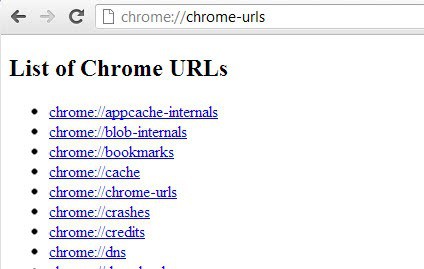
Chrome URLs are the browser's built-in pages that start with chrome://. To see every one available in your copy of Google Chrome, type chrome://chrome-urls (or chrome://about, which opens the same list) into the address bar and press Enter. The list below explains what the important pages do, which ones only work after you enable internal debugging pages, and which debug URLs crash Chrome on purpose.
The list is checked against Chromium's own source code, which defines exactly which hosts appear on chrome://chrome-urls. Pages come and go between versions, so the list in your browser is always the final word for your build.
How to open chrome://chrome-urls
You open chrome://chrome-urls by typing it into Chrome's address bar; there is no menu entry for it. Chrome does not let websites open chrome:// pages, so a chrome:// link on a web page (including this one) does nothing when clicked. Copy the address and paste it instead.
- Click into the address bar (Ctrl+L on Windows and Linux, Cmd+L on Mac).
- Type chrome://chrome-urls or chrome://about and press Enter.
- Click any entry in the "List of Chrome URLs" to open it.
- Scroll down for the "Internal Debugging Page URLs" and "For Debug" sections.
The same address works in Chrome for Android, although the Android list is shorter: desktop-only pages such as chrome://settings, chrome://bookmarks, chrome://downloads and chrome://inspect are excluded there by the source code. Other Chromium-based browsers keep most of these pages under their own scheme, for example edge:// in Microsoft Edge and brave:// in Brave. If you use a page often, bookmark it; bookmarks to chrome:// pages work fine.
Everyday Chrome URLs
These chrome:// pages open browser features directly and are useful to every Chrome user, not just developers. Several also have their own sub-pages, such as chrome://settings/clearBrowserData, which jumps straight to the dialog that deletes Chrome's browsing data.
| Chrome URL | What it opens |
|---|---|
| chrome://settings | The main Settings page |
| chrome://history | Browsing history, with search and delete options |
| chrome://downloads | The download manager |
| chrome://bookmarks | The bookmark manager |
| chrome://extensions | Installed extensions, developer mode and "Load unpacked" |
| chrome://flags | Experimental features you can enable or disable |
| chrome://version | Exact version, command line, executable and profile paths |
| chrome://help | About Chrome page, which also checks for updates |
| chrome://whats-new | Chrome's "What's new" feature page (not on ChromeOS) |
| chrome://newtab | The New Tab page |
| chrome://apps | Installed web apps (not on ChromeOS) |
| chrome://app-settings | Settings for installed web apps (Windows, Mac, Linux) |
| chrome://print | Print preview |
| chrome://dino | The offline T-Rex runner game |
| chrome://credits | Open source components and their licenses |
| chrome://terms | Google Chrome Terms of Service |
chrome://flags is the most powerful page on this list; the separate guide on how to use Chrome flags to enable experimental features covers searching, enabling and resetting them.
Troubleshooting and status pages
These Chrome URLs show what the browser is doing under the hood and are the ones support staff ask for most often. They are read-only status pages unless noted.
| Chrome URL | What it shows or does |
|---|---|
| chrome://policy | Policies applied to the browser and where they come from |
| chrome://management | Whether and by whom the browser is managed |
| chrome://gpu | Graphics feature status, hardware acceleration and driver details |
| chrome://components | Internal components (such as the Widevine DRM module) with per-component update checks |
| chrome://crashes | Recent crash reports, if crash reporting is on |
| chrome://system | System and browser diagnostics in one page |
| chrome://discards | Tab lifecycle data, with options to discard tabs manually |
| chrome://conflicts | Modules loaded into Chrome and third-party software conflicts (Windows only) |
| chrome://sandbox | Sandbox status of Chrome's processes |
| chrome://updater | Chrome updater state and logs (Windows, Mac, Linux) |
| chrome://accessibility | Accessibility mode per tab and globally |
| chrome://inspect | DevTools targets: tabs, extensions, workers and USB-connected Android devices |
If chrome://policy lists entries you did not set, the explainer on the "Your browser is managed by your organization" message helps you work out where they came from.
Network Chrome URLs: net-internals and net-export
chrome://net-internals is now a small toolbox rather than the full network log viewer it once was. Chromium removed the events viewer from it; its Events section points to chrome://net-export instead.
- chrome://net-internals/#dns: look up a host and clear the host resolver (DNS) cache.
- chrome://net-internals/#sockets: close idle sockets and flush socket pools.
- chrome://net-internals/#proxy: view effective proxy settings, re-apply them and clear bad proxies.
- chrome://net-internals/#hsts: add, query and delete HSTS (Domain Security Policy) entries.
- chrome://net-export: record network activity to a NetLog file that you open in Chromium's separate NetLog viewer or send to support.
- chrome://network-errors: every network error code Chrome can show, with links to sample error pages.
Clearing the DNS cache and then flushing socket pools is the standard fix when a site moved to a new server but Chrome keeps connecting to the old one.
Developer and internals pages
Most remaining Chrome URLs are "internals" pages that expose raw data for one subsystem. They are mainly useful for web developers, extension authors and bug reports.
| Area | Chrome URLs |
|---|---|
| Media and real-time | chrome://media-internals, chrome://media-engagement, chrome://webrtc-internals, chrome://webrtc-logs |
| Processes and performance | chrome://process-internals, chrome://tracing, chrome://histograms, chrome://ukm |
| Storage and web platform | chrome://quota-internals, chrome://indexeddb-internals, chrome://serviceworker-internals, chrome://blob-internals |
| Account, sync and profile | chrome://sync-internals, chrome://signin-internals, chrome://profile-internals, chrome://family-link-user-internals |
| Passwords and forms | chrome://password-manager-internals, chrome://autofill-internals |
| Browser state | chrome://local-state, chrome://prefs-internals, chrome://predictors, chrome://site-engagement, chrome://user-actions |
| Devices | chrome://bluetooth-internals, chrome://usb-internals, chrome://device-log |
| Features and apps | chrome://translate-internals, chrome://ntp-tiles-internals, chrome://download-internals, chrome://gcm-internals, chrome://web-app-internals, chrome://extensions-internals |
| AI and newer features | chrome://on-device-internals, chrome://webnn-internals, chrome://actor-internals, chrome://metrics-internals |
Internal debugging pages and the enable toggle
Some Chrome URLs only open after you click "Enable internal debugging pages" on chrome://chrome-urls. Current versions keep a group of developer pages behind a browser preference (InternalDebugPagesEnabled); while it is off, opening one of those pages shows a "disabled" notice instead of the page.
- Open chrome://chrome-urls.
- Scroll to "Internal Debugging Page URLs".
- Click "Enable internal debugging pages".
- Open the page you need; click the button again to turn the group off.
Pages in this group include chrome://discards, chrome://local-state, chrome://user-actions, chrome://network-errors, chrome://tracing, chrome://ukm, chrome://webrtc-logs and chrome://safe-browsing, among others. The exact group differs by version, so check the section on your own chrome://chrome-urls page.
Debug URLs that crash or hang Chrome
The "For Debug" URLs at the bottom of chrome://chrome-urls exist to test crash reporting, and most of them crash, hang or kill part of the browser the moment you load them. Save your work before you try one.
- chrome://crash and chrome://kill: crash or kill the current tab's renderer.
- chrome://hang and chrome://shorthang: freeze the tab permanently or briefly.
- chrome://inducebrowsercrashforrealz: crashes the whole browser.
- chrome://gpucrash, chrome://gpuhang, chrome://gpuclean: crash, hang or exit the GPU process.
- chrome://memory-exhaust, chrome://v8-oom, chrome://blink-oom: simulate running out of memory.
- chrome://badcastcrash, chrome://crashdump, chrome://checkcrash: further crash-reporting tests.
- chrome://inducebrowserheapcorruption and chrome://heapcorruptioncrash: heap corruption tests (Windows only).
- chrome://quit and chrome://restart: close or restart Chrome.
chrome://restart is the useful one: the guide to restarting Chrome without extensions shows how to combine a restart with troubleshooting.
Removed Chrome URLs
Many chrome:// pages from older guides no longer exist, and typing them today opens nothing useful. None of the following are in Chromium's current list of Chrome URL hosts:
- chrome://plugins and chrome://flash (plugin support is gone)
- chrome://cache and chrome://view-http-cache (cache viewers)
- chrome://appcache-internals (AppCache was removed from the web platform)
- chrome://memory, chrome://dns, chrome://stats, chrome://ipc, chrome://profiler, chrome://sessions
- chrome://nacl, chrome://thumbnails, chrome://suggestions, chrome://invalidations, chrome://interventions-internals, chrome://supervised-user-internals, chrome://copresence, chrome://taskscheduler-internals

For memory use per tab today, open Chrome's Task Manager with Shift+Esc on Windows and Linux. Several old pages also became command line switches; the list of useful Chrome command line switches covers those.
FAQ
Is it safe to open chrome:// pages?
Yes, status and settings pages are safe to view. Only the "For Debug" URLs crash or hang Chrome by design, and chrome://flags can make the browser unstable if you enable experiments carelessly.
What is the difference between chrome://about and chrome://chrome-urls?
None for the user: both addresses open the same list of Chrome URLs. chrome://about is simply the shorter alias.
Why do some Chrome URLs show a "disabled" page?
They belong to the internal debugging group. Enable them with the "Enable internal debugging pages" button on chrome://chrome-urls.
Related: using Chrome flags safely, Chrome's Memory Saver mode

chrome://chrome-signin dont work for me
chrome://dino doesn’t show the no internet error page, it only shows the dino game on it
What is the url for chrome I’m trying to make it my default browser and the url is incorrect
chrome://new-tab-page
Minor typo above: chrome;//usb-internals
Is there a way to change “chrome://restart/” into a different URL name?
with a ip grabber you can do it
I made a Chrome extension that features many of these hidden pages: https://chrome.google.com/webstore/detail/hiddenchrome-free/jhcdplpmjpchlfjfihdpimbakifjnnda.
chrome//plugins is now chrome://extensions/
chrome//plugins does not seem to exist any more. I have not been able to access it on more than one computer.
chrome://identity-internals
hihihihihihihihihihihihihihi
l
Did Google get rid of
about:inducebrowsercrashforrealz ?
(Make sure you don’t have any important tabs open before trying that)
yep just kills it!
It’s still working for me.
I miss about:internets ;_;
Bookmarked, These are useful information. Chrome is my main browser even it crashes sometimes. I also use the chrome engine in Avant browser. These urls also work there.Cool.
But I can see chrome://histograms in chrome://chrome-urls/
Strange, I do not. Which version of Chrome do you run?
Private sandbox internals
Oi
Hi, I’m using version 21.0.1180.83 m of Google Chrome, and I’m able to see it.
I can see the histograms page/report using 22.0.1229.26 beta-m.
I’m running the latest Canary version.