How to show, hide and manage system tray icons in Windows 11
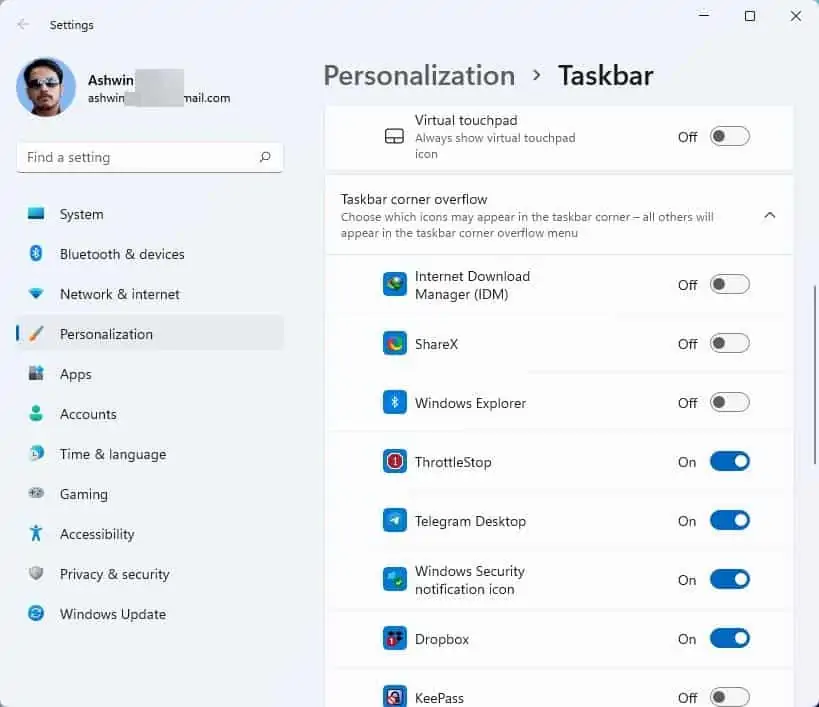
The system tray in Windows 11 is the area at the right end of the taskbar, next to the clock, that holds icons for apps running in the background and the Quick Settings icons for network, volume and battery. To show all tray icons, open Settings > Personalization > Taskbar, expand Other system tray icons, and turn on each app or turn off the Hidden icon menu.
This guide explains where the tray is, what its icons do, and how to show, hide, rearrange and reach tray icons from the keyboard. Microsoft now calls the area the taskbar corner, but most people still search for it as the system tray.
What is the tray icon in Windows 11?
A tray icon in Windows 11 is a small icon that a program or system feature places in the system tray so you can open it, check its status or reach its menu without a window on screen. Cloud sync clients, chat apps, antivirus tools, VPNs and hardware utilities commonly use it, and many keep running in the background after you close their main window.
The tray has three parts in Windows 11:
- Visible tray icons: apps you chose to show permanently on the taskbar.
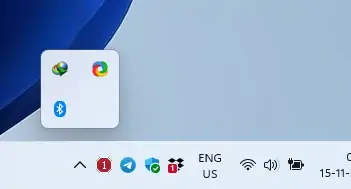
- The hidden icon menu (overflow): the small up arrow (caret) that opens a pop-up panel with all icons you did not pin to the taskbar.
- Quick Settings and clock: the network, volume and battery icons, which open Quick Settings, plus the date and time, which opens the notification center and calendar.
Right-clicking a tray icon usually opens the app's own menu with options such as settings, pause or exit. Right-clicking the network, volume or battery icon opens related Windows settings or troubleshooting instead. You can read more in Microsoft's taskbar customization guide.
Where is the system tray in Windows 11?
The system tray sits at the far right of the Windows 11 taskbar, just left of the date and time, whether the taskbar icons are centered or aligned to the left. If you see only a few icons there, the rest are in the hidden icon menu: select the up arrow (Show hidden icons) to open the overflow panel.
If you cannot see the tray at all, check two things:
- The taskbar may be set to hide itself. Go to Settings > Personalization > Taskbar > Taskbar behaviors and turn off Automatically hide the taskbar.
- The clock may be turned off. Right-click the clock area, select Adjust date and time, and turn on Show time and date in the System tray.
If tray icons appear blank or show the wrong image, the cause is usually a damaged icon cache rather than a tray setting: our guide on how to rebuild the icon cache in Windows 11 covers the fix.
How to show all system tray icons in Windows 11
You show all system tray icons in Windows 11 from the Other system tray icons section of the Taskbar settings page. There are two ways to do it: switch on every app individually, or turn off the hidden icon menu entirely.
- Right-click an empty spot on the taskbar and select Taskbar settings. You can also open Settings > Personalization > Taskbar, or type ms-settings:taskbar in the Run box (Windows + R).
- Expand Other system tray icons.
- Turn on the toggle next to each app you want visible on the taskbar at all times. Apps switched off go to the overflow panel.
- To get rid of the overflow panel completely, turn off Hidden icon menu. Windows then has no place to hide icons, so the caret disappears.
Changes apply immediately. If a program is missing from the list, start it once so it places its icon in the tray, then reopen Taskbar settings.
Early Windows 11 releases had no Hidden icon menu toggle, which is why older guides, including the first version of this article, pointed to the legacy Notification Area Icons Control Panel applet. On current Windows 11 builds, use the Settings toggle instead.
How to hide system tray icons in Windows 11
To hide a system tray icon in Windows 11, turn its toggle off under Settings > Personalization > Taskbar > Other system tray icons, and the icon moves into the hidden icon menu. The app keeps running, it just no longer takes up room on the taskbar.
Think twice before hiding Windows Security. Its tray icon shows warnings about virus protection, firewall and updates at a glance, and hiding it means you only see those warnings when you open the overflow panel or the app.
The section above it, System tray icons, controls three built-in Windows icons: Pen menu, Touch keyboard and Virtual touchpad. If your PC has no pen or touch screen, you can turn all three off to free space.
Hiding an icon is not the same as stopping an app. To stop a program from loading at all, right-click its tray icon and choose its exit option, or disable it in the app's own settings or under Settings > Apps > Startup.
How to move icons between the taskbar and the overflow menu
You can move system tray icons in Windows 11 by dragging them, which is often faster than using Settings. Microsoft documents both directions:
- Select the up arrow (Show hidden icons) to open the overflow panel.
- Drag an icon from the panel onto the taskbar to show it permanently.
- Drag an icon from the taskbar into the panel to hide it.
Windows saves the result to the same toggles you see in Settings, so both methods stay in sync.
The Quick Settings icons (network, volume, battery) and the clock are not part of the Other system tray icons list. The clock's look is controlled from Date & time settings, for example if you want to restore the full date and time format on the taskbar.
Windows 11 system tray shortcuts
Windows 11 lets you reach system tray icons from the keyboard, which helps when a mouse is not at hand or an app window covers the taskbar.
| Shortcut | What it does |
|---|---|
| Windows + B | Moves focus to the first icon in the notification area; use the arrow keys to move between icons and Enter to open one. |
| Windows + A | Opens the action center (Quick Settings with network, volume and other toggles). |
| Windows + N | Opens the notification center and calendar. |
When focus is on the up arrow after Windows + B, press Enter to open the hidden icon menu. The full list is in Microsoft's keyboard shortcuts reference.
FAQ
Why is an app missing from the Other system tray icons list?
The list shows apps that use the tray. Start the app, wait until its icon appears in the tray or overflow panel, then reopen Taskbar settings.
Is the system tray the same as the notification area?
Yes. System tray, notification area and taskbar corner are names for the same area at the right end of the taskbar. Windows Settings and Microsoft's help pages use system tray and taskbar corner overflow.
How did this work in Windows 10?
Windows 10 handles tray icons through a different settings page and an option to always show all icons. See our Windows 10 system tray guide for those steps.
Related: move the Windows 11 taskbar to the top or side, switch Windows 11 to a classic Start menu

Sorry, this no longer works, not even on the current session…
As another stated, this only lasts until restart.
After restarting, when I use explorer ‘shell:::{05d7b0f4-2121-4eff-bf6b-ed3f69b894d9}’, the “Always show all icons …” button is checked. I found that unchecking, exiting, then running the shell command again and re-checking works… until restart.
Does anyone know where in the registry this is saved?
Like always Microsoft doesn’t have a clue how people use their operating system. Taking this option away is another disservice to their customers.
In previous Windows versions the tray icons were wide unless room was needed then common icons would collapse together. Any way to make Windows 11 tray icons wide rather then square?
i was very hopeful, but windows 10 – all updates installed – opening this worked as described, but nothing is saved/changed. so it did not work. madness. a WORLD full of computer users & we are not having simple solutions for this stuff!
Mine is already checked and I am unable to make any changes on that screen.
Good article, it has been very useful for me! Thanks @Ashwin! :]
Control panel is superior. Settings app is still garbage with a new look.
This works only until the restart