Microsoft claims that recent Windows updates did not kill SSDs on some systems
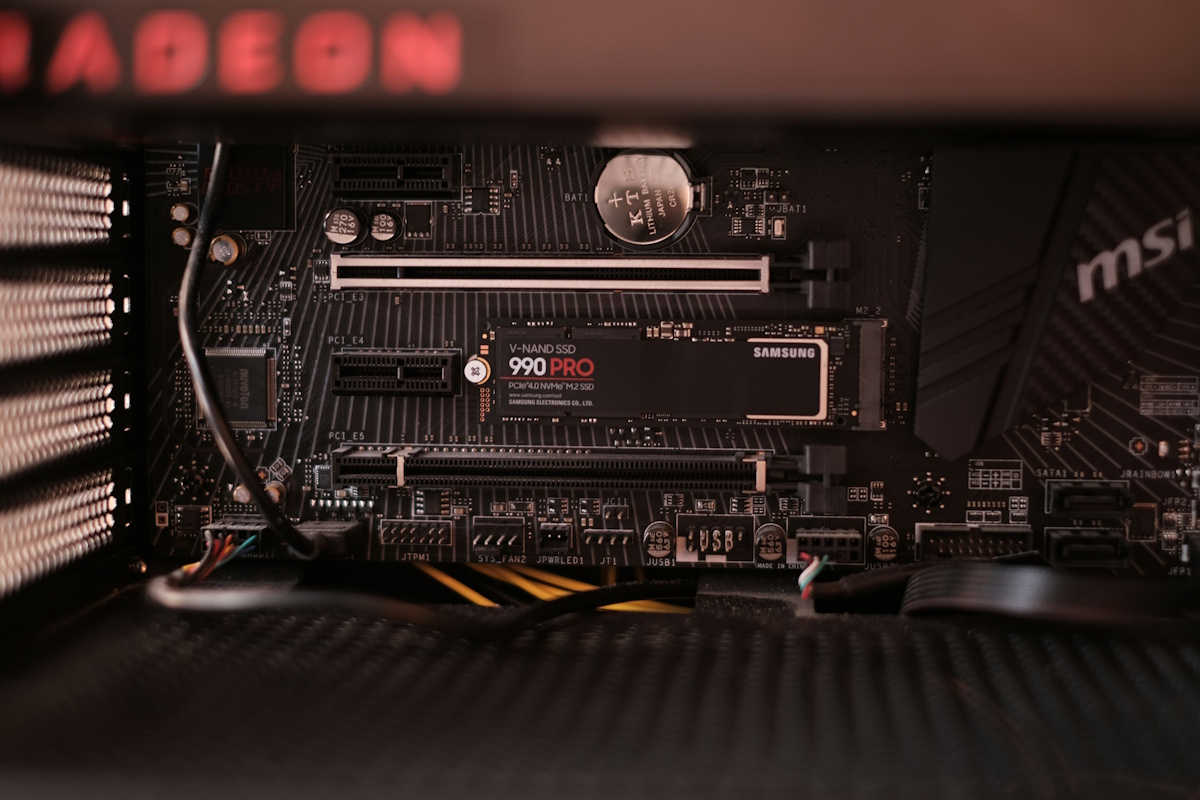
Reports about damaged solid state drives (SSD) started to appear online shortly after the release of the August 2025 security updates for Windows. According to the report, the issue was caused after installation of the latest updates for Windows 11, version 24H2.
It was reproducibly according to the reports and involved copying large number of files or large files to the drives continuously. The SSDs would become inaccessible in worst case, which a reboot sometimes, but reportedly not all the time, would fix.
Microsoft confirmed that it was aware of the reports and investigating the issue. At least one manufacturer, Phison, also confirmed that it was investigating the issue.
Earlier this week, Phison published a statement on the issue. The company said that it could not reproduce the issue after running over 4,500 cumulative testing hours on drives that were said to be affected by the issue. Also, it stated that no customers or partners came forward with claims that their drives were affected during that time.
Microsoft published an update on the Admin Portal claiming that the Windows 11 update has nothing to do with the SSD problem. Microsoft writes: "After thorough investigation, Microsoft has found no connection between the August 2025 Windows security update and the types of hard drive failures reported on social media. As always, we continue to monitor feedback after the release of every Windows update, and will investigate any future reports."
The root cause of the issue remains unclear. Both Microsoft and Phison suggest that it could be related to another, yet unknown, issue that affects the systems of users who noticed the problems.
This pretty much leaves affected Windows users on their own in finding the root cause of the issue. Since the issue is caused by copying large amounts of data to an SSD that is at least 60 percent full, it is advised to avoid this scenario, if possible. This could involve using a different internal or external hard drive for larger write operations, if available, or postponing certain operations, such as the installation of a large game, or larger updates.

We all know this isn’t true, and it’s clear that something more is going on here. It has already been recreated by someone on YouTube. Windows 11 is a complete failure, and everyone involved should be fired, starting with Satya Nadella and Pavan Davuluri.
The problem was caused by Microsoft outsourcing development to India.
And the problem with Indians at Microsoft is that they don’t care about writing quality code.
They just do the bare minimum to get paid and they never go above the requirements.
Firing the Quality Assurance (QA) testing teams was another bad decision, but the problem is still with the bad quality code.
If the code was quality enough, then it would work most of the time without having to test everything in the first place.
Basically Indians outsourced by Microsoft will ‘work their wage’ and not write quality code, on purpose.
Windows is hell and Windows 11 is the most evil demon.
well my rarely used razer blade early 2021 (sporting a 10875h and 3070 with a 2 tb phison controller based drive and 970evo 2tb). i installed all the latest updates and it lost the drive , i hard reset it and then (thankfully) it came online
This is another case of forced updates being terrible for the end user. The biggest reason why forced updates is a thing is purely because Microsoft is using its user base as a test case for its software as they have fired most if not all of their in house teams to test updates before they are released. The best case scenario you are being fed beta software updates and obviously that is not going to always be good for the end user.
Microsoft is not going to admit to their faults at all especially when the liability claims would cost them an absolute fortune.
Read the facts: “Phison published a statement on the issue. The company said that it could not reproduce the issue after running over 4,500 cumulative testing hours on drives that were said to be affected by the issue. Also, it stated that no customers or partners came forward with claims that their drives were affected during that time.”
“The root cause of the issue remains unclear.”
In the past, it’s been user error or mechanical failure due to old, obsolete hardware running in the system. SSDs are notorious for being unreliable when high performance is needed.
SATA SSDs do well in general computing scenarios and are found in “budget” builds. If one wants reliability, stay away from them. Read “budget.”
NVMe SSDs are meant for, designed for high-performance tasks, gaming, and data centers and continue to perform well under heavy stress loads.
Here, no computer on the premises running the antiquated SATA SSD drive.
We always ask ourselves first, “How did we create, promote, or allow the problem.”
If a drive malfunctioned after an update and a proper image had been made, switch out the defective drive and re-image the computer. Not an issue–except for a few who continue to blame MS for their . . . how to say it?
If a piece of hardware malfunctions after an update and works properly again after removing that update, perhaps, just perhaps, that piece of hardware is not to blame.
The problem still happens!
https://youtu.be/TbFIUu_7LIc
Hmmm
The lack of commentary here, must be symptomatic of a disbelieving, disillusioned, audience of M$ users, most of whom are only too well aware that they would never admit to anything that was detrimental, to their licence paying captive audience ,
You don’t think they would actually admit to it do you ? after all it was a small number, and if it is a bug, hardly worth fixing in view of the number affected . :-)
Peter Newton [London UK Linux user since 2004]
I used to be an acquaintance to someone who is a die-hard Windows and Firefox apologist. He would never find any fault in either and would always find made up reasons to defend them when something bad happens. Stuff like “Firefox works best on my computer, Chromium browsers don’t work well on my computer” or “Windows is the only OS worth using, so we have to accept it with its faults, Linux is impossible to use”.
Completely omitting facts like why are Chromium browsers not working on his system or why he doesn’t have the patience or attention span to make both Chromium browsers and Linux work.
That aside, people just have their heads stuck in the sand like this and Microsoft loves it. Most of their users don’t understand anything so they won’t even find out what happens – your SSD fails – then you take your computer to the service and it gets fixed with a new SSD, you either pay or under warranty and don’t pay, you shrug it off and move on.
Those that understand might be frustrated, but if they have their heads stuck in the sand pretending that Windows isn’t blunder after blunder since Windows 8 released, they will try to make it sound like “this happens, people, just accept it and learn to live with it” or say something like “nothing is wrong on my computer here” while either they haven’t installed the update out of fear or having installed it and then their computer caught fire and they are lying about it.
And then there are the people that got sick with Windows and moved to Linux or Mac. Who I can’t blame, both Linux and Mac have some limitations compared to Windows, but both are more stable to use.
The sad part is nothing will change with Windows – it will continue to be a failure and yet a monopoly so it will continue to be the most used OS for a long time unless something massive happens. Like Microsoft becoming so greedy that they find a way to block piracy of the OS so pirates can no longer use it at all, but I doubt Microsoft will ever do that, they would rather have pirates with free Windows Pro and still collect their data with telemetry and built-in AI to sell it for more money.
So nothing will change. Windows will get worse and more bloated and more unstable. Either use it or don’t. I personally stopped using it and have no intentions to use it unless on a secondary PC for work only, but not at home for personal use. It’s too frustrating to deal with.
I’m simply having a good time with my Windows 7 and laughing at all the users who upgraded to 11. I haven’t had any issues with updates, bloat, or unwanted features from Microsoft since sticking with 7, and I am yet awaiting the arrival of the boogieman to breach my system.
@WindowsSevenForever
Yes, Windows7 was great but the problem is that it has not been updated and maintained to a point where one can use a larger monitor with 4k resolutions without scaling issues to name one thing. Whilst Windows 10 or indeed 11 is not perfect at that either it does remain an issue at least in my experience.
If only Microsoft had stayed on the windows 7 pathway and continued in that direction then things could have been great but alas they did not and as it is the current iterations make me long for longhorn even.
All based on personal experience as a homebased,
if “Pro”, user.
Felt wrong when I succumbed to 10, out of well-loved 7.
Oh well, after all customizing, I’ll stay with 10 far longer
now than M$ wants me to. While I’m not ready to switch
to something else within my remaining (few years’)
lifetime, I wish M$ could find a better CEO (or whatever
able operator) to steer its course–back closer to the
brighter terrains of the aughts, specifically XP.
“die-hard Windows and Firefox apologist” Ironic considering most Windows users are on Google Chrome or Edge Chromium, while most Linux distros have either Firefox or one of its forks installed by default.
@anon,
Yeah, apparently it’s possible to like Windows and Firefox too much. I liked Windows when it was the only thing I knew, as soon as I found out Ubuntu, I was instantly interested, but was unable to set up drivers in 2008 on my computer. Firefox was the first browser I knew beside IE and it was amazing, but Chrome was better and still is. Now Chromium feels bloated, but I prefer it over Firefox, I’m looking for something new on the horizon.
I moved to Linux when Windows became unbearable. I think Linux also has issues and not everything works on it, but I’m having less issues and frustrations compared to Windows.
As a Windows user I don’t care about Windows 11 articles like this with e.g. SSDs breaking due to updates, since they usually always end with ‘Microsoft rejects responsibility’ or ‘Microsoft releases yet another bugfix’.
So I don’t care about Windows 11 news such as bugs or security vulnerabilities.
There are just too many bugs in Windows 11 anyway, so using it is basically ‘asking for problems’.
I guess firing the Quality Assurance (QA) team at Microsoft was a bad idea for them, afterall.
That’s the feeling of most Windows 11 users too, always bugs then updates that bring more bugs.