The Best Chrome Extensions That Still Work After Manifest V3
The best Chrome extensions are the ones that still work on Chrome's Manifest V3 platform and solve a daily problem: uBlock Origin Lite for ads and trackers, Privacy Badger for tracker learning, Bitwarden for passwords, Dark Reader for dark mode, Tampermonkey for userscripts, the Wayback Machine for dead links and Augmented Steam for game shopping. Install only a handful, from publishers you can identify.
This page is a short, curated list rather than a catalogue of hundreds of add-ons. It covers what changed in Chrome's extension platform, the picks by job, how to block pop-ups, and how to vet any extension before you click Add to Chrome.
What changed: Manifest V3 removed many classic Chrome extensions
Many extensions from older "best of" lists no longer run in Chrome because Google retired Manifest V2. According to the Chrome developer timeline, Chrome began disabling Manifest V2 extensions in October 2024, Chrome 138 disabled them on all channels with no option to turn them back on, Chrome 139 removed support entirely, and the remaining Manifest V2 items were removed from the Chrome Web Store on August 31, 2026.
That is why the original uBlock Origin, once the top pick on this page, is no longer available for Chrome. Its developer maintains uBlock Origin Lite instead. Other former favorites disappeared for different reasons: abandoned code, sale to new owners, or features that Chrome now has built in, such as tab groups and Chrome's Memory Saver mode, which unloads inactive tabs without an extension.
The practical rule: if an extension on your system shows as disabled or unsupported on the Extensions page, look for a Manifest V3 replacement from the same developer before you search for alternatives.
The best Chrome extensions at a glance
The table lists one recommended Chrome extension per job, each currently listed in the Chrome Web Store or on its developer's official page.
| Job | Extension | Why it makes the list |
|---|---|---|
| Ads and trackers | uBlock Origin Lite | Manifest V3 content blocker by Raymond Hill, filtering handled by the browser |
| Tracker learning | Privacy Badger | Free EFF extension that blocks trackers it sees following you across sites |
| Passwords | Bitwarden | Password manager with extensions for Chrome and most other browsers |
| Dark mode | Dark Reader | Dark theme for any site with brightness, contrast and sepia controls |
| Customization | Tampermonkey | Runs userscripts that add features to or modify web pages |
| Research | Wayback Machine | Official Internet Archive extension: saves pages and finds copies of dead links |
| Game shopping | Augmented Steam | Free extension that improves browsing and shopping on Steam |
Privacy and ad blocking: uBlock Origin Lite and Privacy Badger
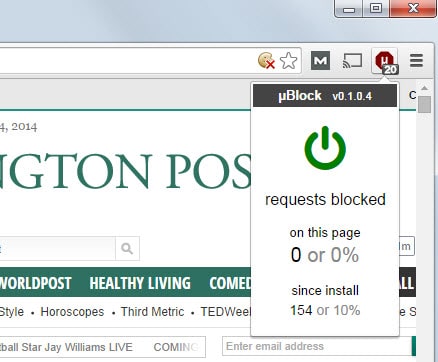
uBlock Origin Lite is the best ad blocker for Chrome today because it is built for Manifest V3 and comes from the developer of the original uBlock Origin. The Chrome Web Store listing describes it as an entirely declarative blocker for ads, trackers and cryptominers, with a default ruleset drawn from uBlock Origin's own lists, EasyList, EasyPrivacy and Peter Lowe's list. More rulesets can be enabled on the options page. Background on the switch is in our article on uBlock Origin Lite.
Privacy Badger from the Electronic Frontier Foundation takes a different approach. Instead of relying only on lists, it watches third-party domains for tracking techniques such as identifying cookies and canvas fingerprinting, and stops loading a domain once it tracks you across three separate sites. It also receives learning updates from EFF's Badger Sett crawler. It is free and works alongside uBlock Origin Lite.
Pick one list-based blocker and, optionally, Privacy Badger. Stacking several ad blockers adds overhead and makes site breakage harder to diagnose.
Best popup blocker for Chrome: built-in setting first, extension second
The best popup blocker for Chrome is the one already built into the browser, and an extension is only needed for overlays and pop-unders it misses. Google's Chrome Help page gives the path:
- Open the three-dot menu and select Settings.
- Go to Privacy and security, then Site Settings, then Pop-ups and redirects.
- Choose the default behavior. To block a single site, select Add under "Not allowed to send pop-ups or use redirects" and enter the address; use [*.]example.com to cover a whole domain.
When Chrome blocks a pop-up, a Pop-up blocked indicator appears in the address bar, where you can allow it once or always for that site.

A content blocker such as uBlock Origin Lite removes many of the ad scripts that open pop-ups in the first place. If you still want a dedicated tool, Poper Blocker targets pop-ups, pop-unders, new tabs, overlays and cookie banners, and has about 2 million users. Its listing advertises a free 7-day trial, which points to a paid subscription for part of the feature set, so check what the free tier covers. We looked at the extension in our original Poper Blocker review. Notification prompts are a separate setting: see how to block notifications in Chrome.
Passwords and comfort: Bitwarden and Dark Reader
Bitwarden is the password manager extension to install if you want one vault across Chrome and every other browser you use. The Bitwarden download page lists extensions for Chrome, Edge, Firefox, Safari, Opera, Vivaldi, Brave, DuckDuckGo and Tor Browser, with a free plan and a paid Premium tier. A standalone manager makes sense if you use browsers outside Chrome or devices without a Google account, since Chrome's built-in Google Password Manager is tied to your Google account.
Dark Reader applies a dark theme to websites that do not offer one. You can adjust brightness, contrast and sepia, and turn it on for all sites or only selected domains. It is one of the extensions that people notice most when it is missing, especially on laptops used at night.
Power users: Tampermonkey userscripts
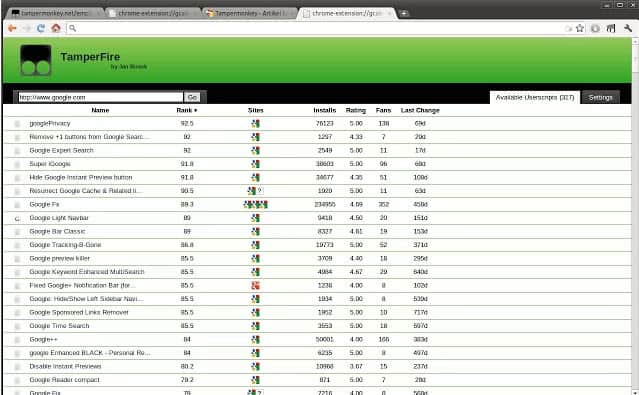
Tampermonkey is the best Chrome extension for customizing websites, because it runs userscripts: small JavaScript programs that add features to pages or change how they behave. The Tampermonkey site describes it as one of the most popular extensions across all major browsers.
One step trips up many users on current Chrome. Since Chrome 138, Google's userScripts API documentation requires users to allow it per extension:
- Open chrome://extensions in a new tab.
- Select Details on the Tampermonkey card.
- Turn on Allow User Scripts.
Install scripts only from sources you trust and read what a script does: a userscript has the same access to a page as the page itself.
Research and shopping: Wayback Machine and Augmented Steam
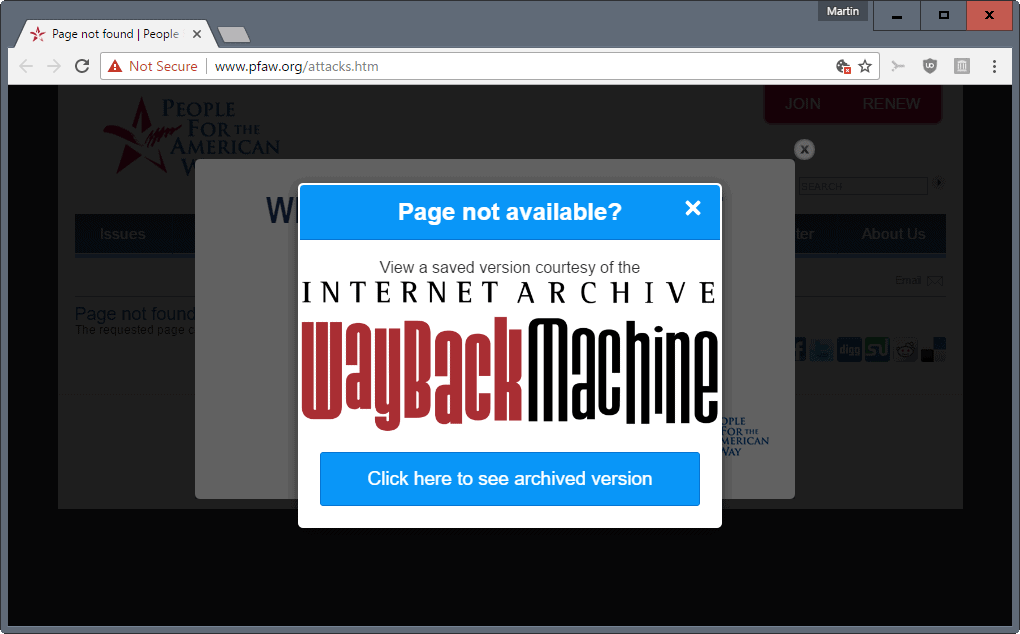
The Wayback Machine extension is the best way to rescue dead links in Chrome. The official Internet Archive extension saves the page you are viewing with Save Page Now, and when a page returns an error such as 404 it checks automatically whether an archived copy exists.
For PC gamers, Augmented Steam is a free extension that improves browsing and shopping on the Steam store.
How to vet a Chrome extension before you install it
A safe Chrome extension has an identifiable publisher, a clear purpose, permissions that match that purpose and recent updates. Extensions can read and change the pages you visit, so a quick check is worth it:
- Publisher: check the "Offered by" line and whether the developer has a website, a support address and, ideally, public source code.
- Permissions: a dark mode or ad blocker needs page access; a calculator does not.
- Maintenance: an old last-updated date is a warning sign after the Manifest V3 switch.
- Ownership changes: an extension that suddenly adds new permissions after an update may have been sold.
- Count: fewer extensions mean less memory use and a smaller attack surface.
Chrome lets you limit access after installation. Per Google's extension help, open More, Extensions, point to "This can read and change site data" and choose When you select the extension, On the current site, or On all sites. Under Manage extensions, Details, you can also restrict an extension to listed sites or allow it in Incognito.
FAQ
Is uBlock Origin still available for Chrome?
No. The original uBlock Origin is a Manifest V2 extension, and Chrome no longer runs those. Its developer offers uBlock Origin Lite for Chrome instead.
How do I see all extensions installed in Chrome?
Type chrome://extensions in the address bar or open More, Extensions, Manage extensions. From there you can turn extensions off, remove them or open Details for permissions and site access.
Do Chrome extensions slow down the browser?
Each extension uses some memory and can add work to every page it has access to. Keep the list short, remove extensions you no longer use and restrict site access to "When you select the extension" where possible.
Do Chrome extensions work in Edge, Brave and other Chromium browsers?
Most do, because those browsers are built on Chromium and share its extension platform. Check each browser's extension settings, since some ship their own ad or tracker blockers that can overlap with an extension.
Related: the best Firefox add-ons, Auto Tab Discard for freeing Chrome memory