Google is merging ChromeOS and Android

Google is finally combining Android and ChromeOS into a single platform. This isn't the first time the idea has been floated.
TechRadar's Lance Ulanoff reports that Sameer Samat, the President of Android Ecosystem at Google, has told him blog that Google is combining Android and ChromeOS. We have heard about such rumors for a long time, nearly a decade. But this pretty much confirms it.
Last year, reports emerged stating that Google wanted ChromeOS to compete with iPad. That's an interesting idea. In 2023, I reported that Apple was working on a low-cost MacBook to compete with Chromebooks. Well, that's supposedly happening soon according to a report by Apple Insider, Apple is expected to launch a MacBook with an A18 processor, similar to the one on iPhones. Apple's upcoming iPadOS 26 improves things drastically with multitasking bringing it closer to macOS, hopefully the new Chrome OS/Android will be up to the challenge.
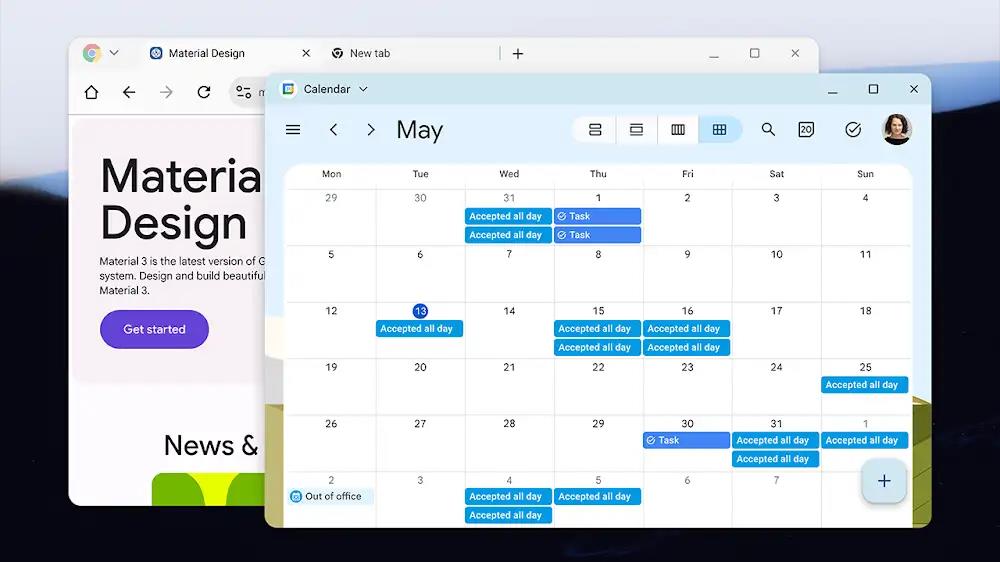
As a matter of fact, let me quote some new multitasking features that were announced for Android 16. The Desktop Mode will add a new desktop windowing system to open, group, resize multiple app windows. Android 16 also supports custom keyboard shortcuts for navigation, launching apps. It also adds Taskbar Overflow, which shows icons of recently opened apps. Now, it makes a lot more sense. This is closer to ChromeOS.
Samat also seemed to be interested on how people were using their laptops these days, what they're getting done. This could have been a subtle hint at the app ecosystem that people can expect on ChromeOS/Android. For example, whatever you do on your laptop, you can do the same on Android. Throw in a few slides about Gemini AI, Gmail, Google Docs, etc. and you got yourself a nice little promo. That's probably how they would market it to attract users, I suppose.
A laptop running on Android is interesting for sure. Well, it can't be worse than Windows, I imagine. The real question is, which devices would be compatible with this upcoming operating system.

Not sure who this is targeting? I mean who wants a useful ‘desktop’ that is Android or a phone that has a window/desktop UI? Bean counters or impending legalities maybe but seems three steps backwards.
What happened to Fuchsia? Wasn’t it supposed to replace ChromeOS and Android?
I used Samsung Dex for a few years as a laptop replacement for productivity/recreational tasks and found it worked well enough. Occasionally, I needed a custom APK, but the issues I encountered were mostly with applications not the OS.
This is quite a big deal. It’s surprising this didn’t happen much sooner, maybe 2016; it was always a bit odd why Google and Apple didn’t start heavily moving in this direction then. Perhaps concerns over antitrust.
iOS and Android are so far entrenched, that it would be near impossible for any other company to uproot them. It’s not that no other company could create a better product, the issue is getting masses of developers to create their apps for another platform other than iOS and Android – as Microsoft found out.
Android is already the most used operating system in the world – it overtook Windows a long time ago. And while a lot of people use MacOS, it never reached huge market share. Apple and Google will be fully aware that their strongest cards are Android and iOS and they have the ability to take everything for themselves.
When looking at how people use their laptops, most just use email, calendar, web browser, photo/video viewer, word processor, printer, scanner, etc.. These are all things that can be done on phone hardware.
Therefore, the ability to have just one device (a phone) and then wirelessly connect it to a display, keyboard and mouse when required will likely suit the majority of people’s needs. GPU intensive tasks such as gaming will inevitably just be offloaded to cloud services such as NVIDIA GeForce Now and Xbox Game Pass.
As it becomes more mainstream rather than being limited to flagship phones, developers go all in on making their apps work with larger screens and then the pendulum starts moving. Google and Samsung work together to push the limits of Android Desktop Mode and Samsung DeX (which are already quite Windows like). Sales of devices running Windows and MacOS start decreasing, which makes Android and iOS even more enticing for developers. School devices will just be phone hardware inside a laptop shell.
While I am very much a desktop person, it seems inevitable to me – much like how smartphones replaced cameras for the majority of people, despite dedicated cameras having larger sensors, better lenses, etc..
The technology side is interesting, but a Silicon Valley duopoly with complete and total control will be somewhat concerning…
I bet this won’t come to ChromeOS Flex, because Google won’t let it happen. They would rather sell you a Chromebook. Otherwise, this would be great for making an old laptop into an Android device.
It’s a terrible idea. Microsoft tried this with Windows 8 and failed, and they should have learned their lesson. Mobile and desktop should always be kept separate.
My PC is not a terminal, for one. I avoid Google, for two.
I never think trying to make a one OS for both mobile and desktop platforms works well without some compromises. It’s why Apple created operating systems for all their products that work together but also are designed specifically for the platform they run on.
It seems like it’s falling into the category of Windows 8. Except this one seems to change its layout based on screen size and peripherals attached. I only use Android on my phone, because there is nothing better and the Chinese ROMs that my phones come with are doing a good enough job that I don’t have to flash my own ROM instead. On PC it’s a different story, there I have a choice between Windows and Linux and I most definitely don’t want anything to do with Windows anymore.
They shouldn’t forget to combine regular Linux along with it as that will allow us to run packages from Arch repos for example out of the box.
Seems likes it will be a horrible experience on a smaller sceen like a phone or tablet. On a chrome book it might be ok