James Russell, the Physicist Behind CD and DVD Technology, Dies at 95
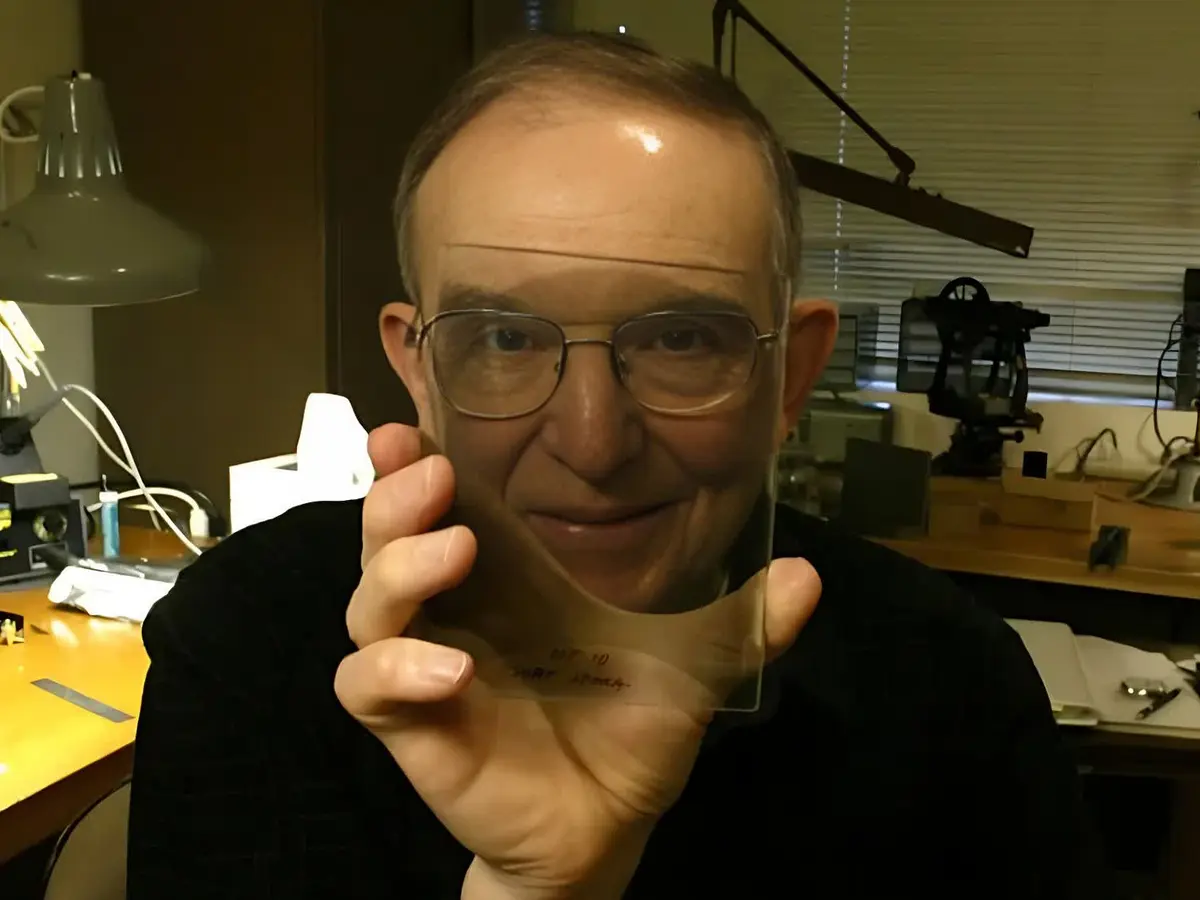
James T. Russell, the physicist whose inventions laid the foundation for the CD, DVD and Blu-ray, has died at the age of 95. Russell died peacefully earlier this fall in Bellevue, Washington, according to his family.
Over a career that spanned almost his entire life, Russell earned more than 70 patents. His biggest breakthrough was the first digital-to-optical recording and playback system, which used a laser instead of a physical needle to read digital data from a disc.
A Light Beam Instead of a Needle
Russell developed the idea while working as a senior scientist at Battelle in Richland, Washington, in the 1960s. Vinyl records were full of pops and hiss caused by a needle scraping through microgrooves, and he wanted cleaner recordings. His question was simple: what if a light beam could read a digital record?
The idea met skepticism. "I think there was some feeling amongst the moneybags that it probably wouldn't work, (or) if it did work there's no advantage, no value in optical records," Russell recalled in a 2004 interview. "What would you use it for, and would people want it and, anyway, if it was any good, IBM would have already invented it."
Battelle gave him some money to experiment anyway. His earliest patents in the field were issued in the mid-1960s, and he had a working prototype by the 1970s that used a laser to read binary data from a disc. The technology was later licensed by Sony and Philips, which handled the engineering, marketing and standardization that turned it into the compact disc.
Foundational, but Rarely Credited
Russell's system became the basis for CD-ROM, DVD and Blu-ray. CDs peaked in the early 2000s with a 95.7% share of music sales, according to the Recording Industry Association of America.
Russell did not earn royalties, never made a fortune and was rarely credited. His patents passed from company to company. Some experts also credit earlier work: engineer David Paul Gregg developed analog optical disc technology in the 1950s, and researchers at Philips improved on optical playback.
According to his daughter, Kristen Russell, he did not dwell on it. "In later years he would shrug when asked about the CD and comment that it was a wonderfully complex challenge that he was delighted to have solved," she wrote.
An Inventor Until the End
Born in Bremerton, Washington, in 1931, Russell became interested in technology as a boy, working as an apprentice to an electrician at his father's dairy plant for 7 cents an hour. While still in high school he helped build a radio station in Port Orchard. He studied physics at Reed College, graduating in 1953, and worked at General Electric before joining Battelle.
He kept inventing for decades. His children say he carried a running list of ideas on index cards in his shirt pocket, and he received his final patent, for a device that measures the gases exhaled by patients under anesthesia, at the age of 88.
Russell is survived by three children, seven grandchildren and five great-grandchildren.

Leave a Reply