Memory Prices Expected to Rise Up to 50% in Q3 With No Relief Until 2028, Jefferies Predicts
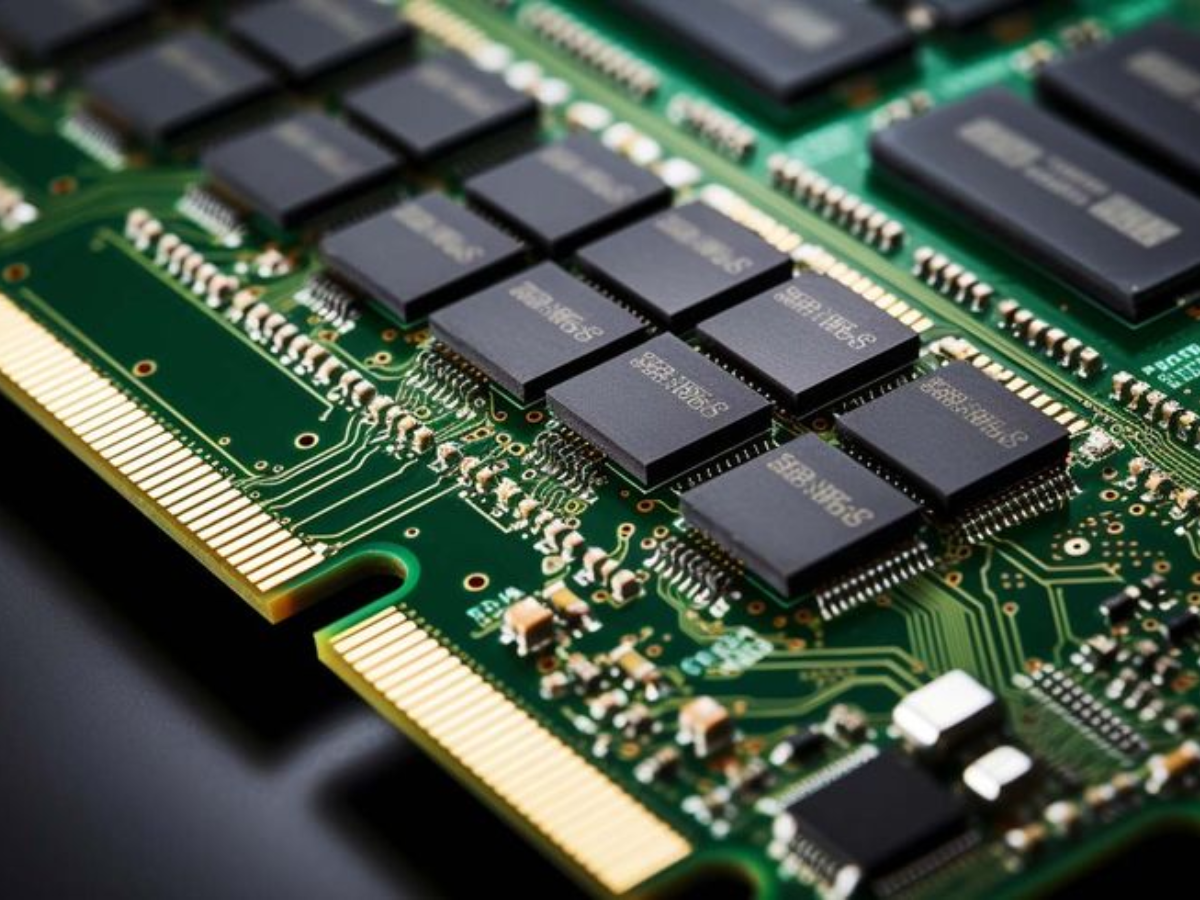
Jefferies Equity Research predicts significant increases in memory prices over the next few quarters, with no substantial relief expected before 2028.
The firm expects memory prices to rise by 40 to 50 percent in the third quarter of 2026, followed by an additional 30 to 40 percent increase in the fourth quarter.
The upward pressure is then projected to continue with year-on-year increases of 40 to 45 percent in 2027. A recovery is anticipated in 2028, but only with limited price reductions of around 15 to 20 percent.
What Jefferies Is Predicting and What’s Driving the Memory Price Crisis
The Jefferies forecast presents some of the most cautious memory pricing predictions to date. The numbers, reported by Wccftech, outline the following trajectory:
- Q3 2026 a 40 to 50 percent increase in prices,
- Q4 2026 an additional 30 to 40 percent rise, and then a 40 to 45 percent year-on-year increase in 2027. By
- 2028, prices are expected to recover modestly, rising 15 to 20 percent as production capacity expands.
- If these projections are accurate, a memory module that costs $100 today could exceed $200 by late 2027.
The pressure on memory prices is driven by demand from AI data centers, with chipmakers prioritizing high-margin orders for AI infrastructure over standard consumer DRAM and NAND.
This shift differs from typical memory market cycles, which are usually influenced by supply constraints. Currently, the demand-driven situation involves hyperscalers making long-term commitments that tie up production capacity, which might otherwise be available for the consumer market.
Micron has recently confirmed $22 billion in long-term commitments from customers, with other memory manufacturers like Samsung and SK Hynix in similar positions.
Why Chinese Memory Hasn’t Helped and How Consumer Devices Are Being Affected
Former Samsung boss Kyung-Hyeon Kye once predicted that the crisis might end sooner thanks to increased manufacturing capacity from Chinese producers.
However, reports suggest that Chinese memory chips from manufacturers like CXMT are not selling at significant discounts. Industry analysts say vendors have told them that CXMT prices are comparable to those of Samsung, SK Hynix, and Micron, which eliminates the expected price relief from Chinese expansion.
This pressure on memory prices is already affecting consumer prices across various product categories:
- Apple increased prices for its iPad, Mac, HomePod, and Apple TV last week, with the MacBook Neo rising from $599 to $699.
- Microsoft announced it will raise prices for Xbox Series S and Series X by at least $100 starting August 1.
- Sony has also increased PS5 prices, with the 2TB PS5 Pro now priced at $899.
- Valve introduced the Steam Machine at $1,049, about $300 above its original target price.
- Looking ahead, shipments of smartphones are expected to fall 15 percent in 2026 due to higher prices and weaker demand.
- The PC market is projected to decline by 11.3 percent.
If Jefferies' forecasts are correct, the pressure on consumer device prices will continue to intensify through 2027 rather than easing.
What Users Should Do as Memory Prices Keep Rising
Users planning major hardware purchases should consider buying sooner rather than later, as further price increases are expected through Q3 and Q4.
It may also be worth looking into refurbished or pre-owned devices, which currently hold their prices but could see increases as the secondary market shifts.
Additionally, sticking with current devices longer aligns with broader trends of extended replacement cycles.
When purchasing memory and storage, reviewing your requirements carefully can help avoid the impact of price hikes, especially since smaller configurations may delay or reduce those increases.
For PC builders, RAM and SSD upgrades are the components most directly affected. Buying memory before Q3 could lead to significant savings.
The forecast from Jefferies is consistent with recent signals from hardware manufacturers. Microsoft has reported paying two-and-a-half times more for memory now than at the end of last year and expects costs to double again by late 2027.
Apple has also noted that it has never experienced such rapid increases in component prices. Recently, the Steam Deck received a 50% price hike, partly due to memory costs.
The memory crisis is shaping up as one of the major consumer technology stories of 2026. Whether projections from Jefferies turn out to be accurate will depend largely on how quickly AI infrastructure demand stabilizes and whether new manufacturing capacity can come online.
For now, users should anticipate continued upward pressure on device prices through at least the end of 2027.

Anyone who built or bought new computers 3 or 4 yrs ago, thanks themselves everyday for doing so then.
Good bye Personal Computers. It was a good run while it lasted. And on that front also good bye to owning physical media and internet privacy.
We can’t have Personal Computing (thanks Amazon for saying the quiet part outloud), local storage (thanks Apple for normalizing not having SD card and AI companies, corrupt government and RAM cartel!), physical media (thanks Sony), privacy on our machines (thanks facebook), privacy online (thanks KOSA and facebook), privacy in public (LEOS and flock), privacy in our own cars(Spy car act) free, private and opensource firmware for Routers (thanks FTC!) 3D printers, cnc machines, etc, (thanks incoherent bill AB2047 and Bloomberg), the list goes on and on.
How do you manage to carry your enormous ego up the stairs?
Its no coincidence that the 3 major companies involved in ram/memory development have at some point been caught doing underhanded stuff.
They raise the prices because they can and the people they cater to will pay it.
As far as AI is concerned it is simply a privacy invasive tool for the ruling class and being used by them to pump their value and control.
If the end of the world comes in my lifetime I can only hope to see the ruling class go first. It would have been far too late but would be a nice sight to see in my final hours.
I am set for a while and have a few kits of RAM laying around in 16gb and 32gb for laptops and 64gb and 128gb kits for desktop so I am good for that as far as I am concerned. HDD’s and SSD is another story though. That is something that is an ever moving target and eventually in the not to distant future I will need more than what I have now.
Hopefully by then the world see’s some sense and some rapid changes are made not only in the tech world but to governments but that is just wishful thinking because we all know governments, companies and corruption just go hand in hand. In their eyes its just business like 1’s and 0’s but to normal people with a degree of integrity and moral fiber its criminal.
In light of that, my tech expenditure is expected to fall to 0% indefinitely.
No doubt there will elements of price gouging thrown into the mix here, just to screw over the consumer even more.
It will be interesting to see if the anticipated demand for the premium iPhone 18 and Samsung Galaxy S27 phones will stay strong when prices for each will no doubt rise by double digit numbers on release.
There must come some point where consumers will just walk away and say enough is enough.
Doesn’t take a market expert to see into the RAM future. Many data centers for AI still in planning stages, I don’t think we are close to peak demand for RAM yet. When Apple starts begging the US gov. to buy Chinese RAM you know it’s not a good sign. I know for myself I am not so sure AI will be worth it.
AI is not worth it. It’s worthless.
I like to say:
Where AI (artificial intelligence) is needed, NI (natural intelligence is lacking there.