OpenAI Expands AI Education Programs At A National Level
OpenAI Expands Its Government-Focused Education Initiative
OpenAI has introduced Education for Countries, a new pillar under its broader OpenAI for Countries initiative. The program is designed to help governments modernize education systems and prepare future workforces by embedding AI tools, training, and research directly into national education infrastructure.
The initiative targets what OpenAI describes as a growing gap between what modern AI systems can do and how widely they are used in everyday learning and work. Education systems are positioned as a primary way to close that gap, particularly as AI-driven changes reshape job requirements.
What Education For Countries Includes
1. AI Tools Integrated Into Learning Systems
Participating countries gain access to AI tools such as ChatGPT Edu, newer GPT models, study mode, and collaborative features like canvas. These tools can be customized to reflect local curricula, language needs, and education priorities rather than being deployed as generic platforms.
2. Research On Learning Outcomes And Productivity
The program includes partnerships focused on large-scale education research. These studies examine how AI affects student learning, teacher workload, and institutional productivity. Results are intended to inform national policy decisions, workforce planning, and future AI development.
3. Training And Certifications For Educators And Students
OpenAI is also providing structured training through initiatives such as the OpenAI Academy and AI-focused certifications. These programs are designed to align practical AI skills with national workforce goals, targeting both educators and students.
4. A Network Of Government And Academic Partners
Education for Countries brings together governments, universities, and researchers into a shared network. Participants are expected to exchange deployment experiences, share best practices, and collaborate on responsible AI use in education.
Countries Participating In The First Cohort
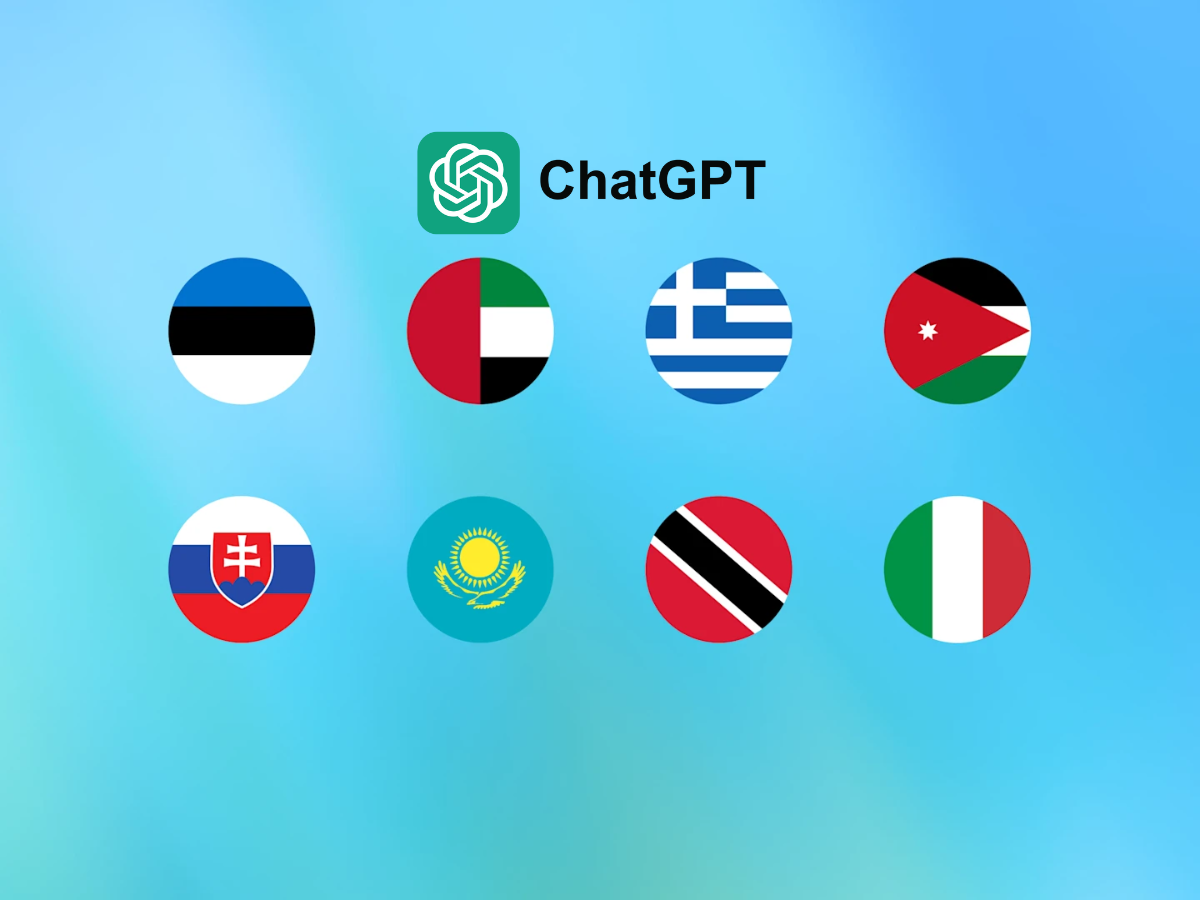
The initial group includes Estonia, Greece, Italy (through the Conference of University Rectors), Jordan, Kazakhstan, Slovakia, Trinidad and Tobago, and the United Arab Emirates.
Estonia is highlighted as an early example. ChatGPT Edu has already been deployed nationwide across public universities and secondary schools, reaching more than 30,000 students, educators, and researchers in its first year. Long-term studies are also underway, including research partnerships measuring AI’s impact on learning outcomes across tens of thousands of students.
How AI Is Being Rolled Out In Schools
OpenAI describes a phased rollout model. Educators are typically equipped first, receiving tools and training before broader student access is introduced. In higher education, students already have direct access to ChatGPT Edu. In secondary education, student access begins with limited pilots developed in coordination with local authorities.
These pilots are paired with safeguards aimed at younger users, including age-appropriate model behavior and AI literacy resources developed with partners such as Common Sense Media.
Broader Context And Next Steps
Education for Countries builds on OpenAI’s existing education-focused efforts, including certification programs and university research partnerships. The company frames the initiative as part of its broader mission to ensure advanced AI systems expand opportunity rather than limit access.
OpenAI has stated that additional countries will join the program in future cohorts, with the next group expected to be announced later in 2026.

I cannot wait for AI to die.
Sounds like it might happens sooner. I have this friend and a couple of people in his group that are obsessed with AI to tell them basic things like how to put on their socks more efficiently to save precious time so they can have more fun in their lives.
I can’t wait to see what their reaction will be when AI crashes and burns. I don’t want to call my friend stupid, but I think people who over-rely on AI really lose some intelligence and autonomy.
He likes to have AI summarize for him information, completely ignoring the fact that every AI has a bias when it presents information. For me there is nothing more enjoyable than doing my own research and coming to my own conclusions. AI summarizing stuff for you is like telling some other person to do it – it will go through their personal bias regardless of how impartial they may try to be.