
Internet Explorer 7 final released

Microsoft finally made it happen and released the final version of Internet Explorer 7 to the public. You can download it from the official Internet Explorer website over at microsoft.com. Note that downloads require you to pass a WGA check before they become available. While you should not have any issues with the download itself, it means that only users running genuine versions of Windows can download Internet Explorer 7.
Please note that Internet Explorer 7 is currently only available for Windows XP and Windows Server 2003.
If you run into troubles you should check out the release notes as it contains a big list of information about common troubles you may run into. They also address problems with third party tools on the page, really helpful. Would I recommend to switch to IE7 ? Yes I would. Even though I'm not using the browser as my main one, a lot of third party tools rely heavily on IE core modules. So, if you update the browser other Windows components benefit from it as well.
To move the menu bar on top do the following:
1. Click Start, Run, and then enter regedit into the runbox
2. Press ENTER or click OK
3. Browse to the following key:
HKEY_CURRENT_USERSoftwareMicrosoftInternet ExplorerToolbarWebBrowser4. Click the Edit menu in regedit
5. Select New and then DWORD value
6. The name should be highlighted in the right column. Just type over this to name it:
ITBar7Position
7. Double click your new entry in the right column.
8. Change the value to 1.
9. Close regedit and open IE7 to see the change.For those registry gurus... here's the process in one swoop:
[HKEY_CURRENT_USERSoftwareMicrosoftInternet ExplorerToolbarWebBrowser]
"ITBar7Position"=dword:00000001
You may want to disable your antivirus software prior to installing Internet Explorer, read below for a full explanation:
A few people have asked why we recommend temporarily disabling anti-virus or anti-spyware applications (which I’ll refer to together as anti-malware) prior to installing IE7, so here’s a little insight to the situation.
Along with copying IE7 files to your system, IE7’s setup writes a large number of registry keys. A common way anti-malware applications protect your computer is by preventing writes to certain registry keys used by IE. Any registry key write that fails during setup will cause setup to fail and rollback changes. We work around the problem in most instances by checking permissions at the beginning of setup, but many anti-malware programs monitor the key rather than change permissions. Therefore, setup thinks it has access when it starts, but then fails when it later attempts to write the key.
The majority of users likely haven’t seen any such problems even with anti-malware enabled because we work with third-party vendors to identify IE7 setup as ‘safe’ based on something like digital signatures or file hashes. While this could lead us to remove the recommendation to disable anti-malware apps, we’ve decided to leave it in setup because a number of factors may still cause some customers to have this problem. Specifically:
[*]With all the anti-malware apps available, we don’t want to assume all of them work just because we haven’t heard of a problem yet.
[*]Even anti-malware apps we’ve tested sometimes require the latest definition updates. If a user doesn’t have the latest definitions, he or she may still hit a problem even though we consider the issue resolved.
[*]Failed installation is an awful user experience so we take every step to reduce the chances of setup failing.
I hope this helps answer some of your questions.
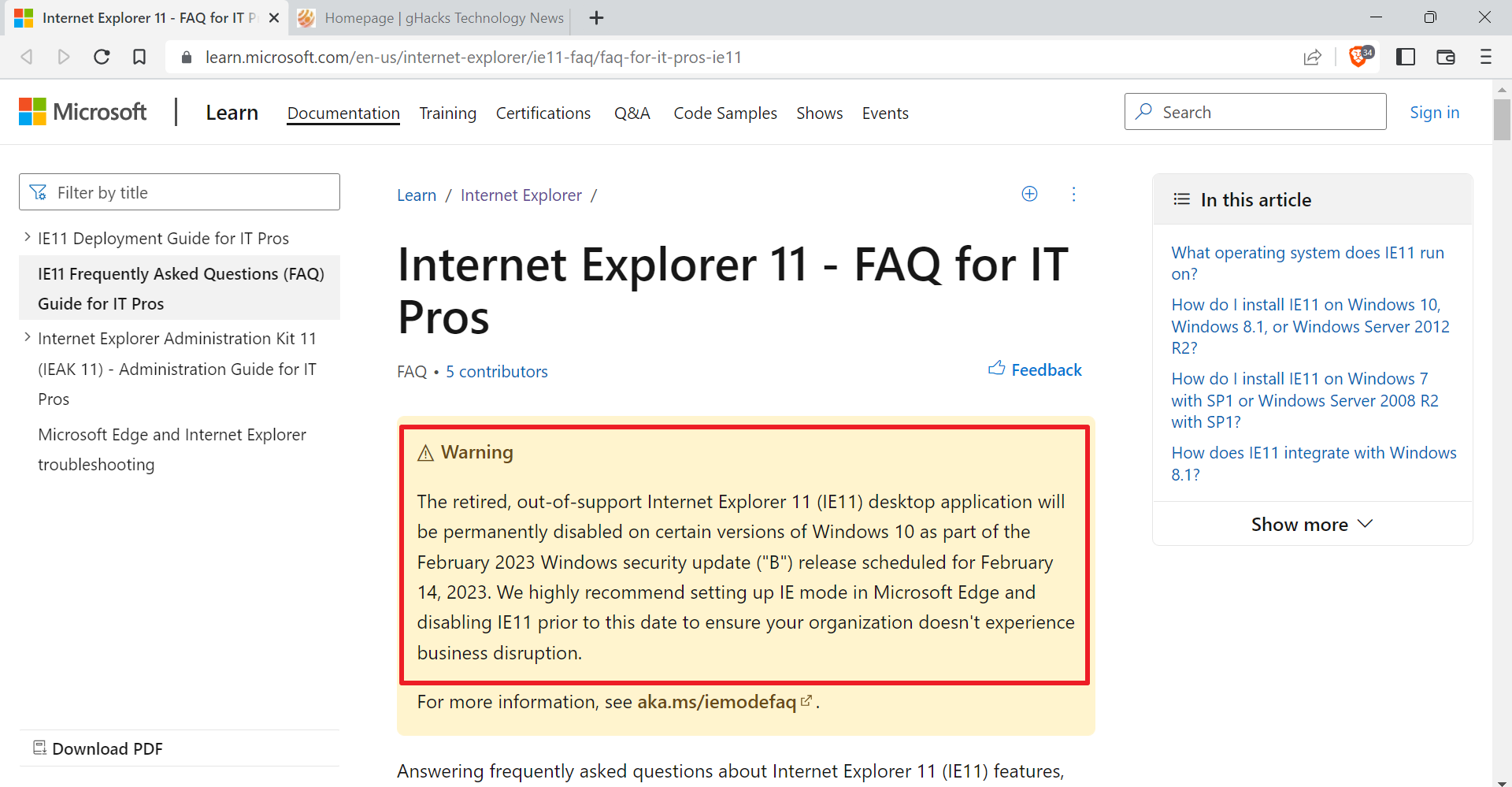
Update: Internet Explorer 7 has been updated, and new versions are now available for download. Windows users can download the latest version of Internet Explorer from the Microsoft website. Windows XP users can update the browser to Internet Explorer 8, while Vista and Windows 7 users can download and install Internet Explorer 9. When Windows 8 comes out, Internet Explorer 10 will also be available and it looks as if it will also be made available for Windows 7.
Update 2: Internet Explorer 10 has been released. It ships with Windows 8, and is available as a separate download for Windows 7.
Advertisement








With the latest version of Mozilla Firefox(ver 2) ready I’m happy with it rather than trying IE7.
And here is the IE7 security Hole Already here:
http://news.google.co.in/news/url?sa=t&ct=in/0-0&fp=453aadd035c3fd16&ei=jRg6RYSCDYWuoQLFqIS_AQ&url=http%3A//www.techworld.com/security/news/index.cfm%3Fnewsid%3D7141%26pagtype%3Dall&cid=1110508121
Johny
http://FreewarePlaza.com
One of the most interesting aspects of the IE vs. Firefox battle is the development of the ecosystem of extensions or add-ons. Right now firefox had a great advantage in this space but you can see microsoft trying to catch up.
Microsoft has a interesting partner in Trailfire, a recommended download for IE7. See link:
http://www.ieaddons.com/SearchResults.aspx?keywords=trailfire
But this extension is also available for firefox. See link:
https://addons.mozilla.org/firefox/3524/
This is not about bugs. I think the ecosystem for firefox and IE will decide who wins this battle. What do you think?
Just read a news item about the first security bug just discovered !
I for one will not be using the new IE.
Firefox man now.
I know Micro$oft will force the upgrade on me via the automatic updates, but I will not agree to install.
I am a designer and I have to test a site in all browsers and about 80% still use IE6 and it will take a few years before everybody upgrades, so I need to keep IE6 running.